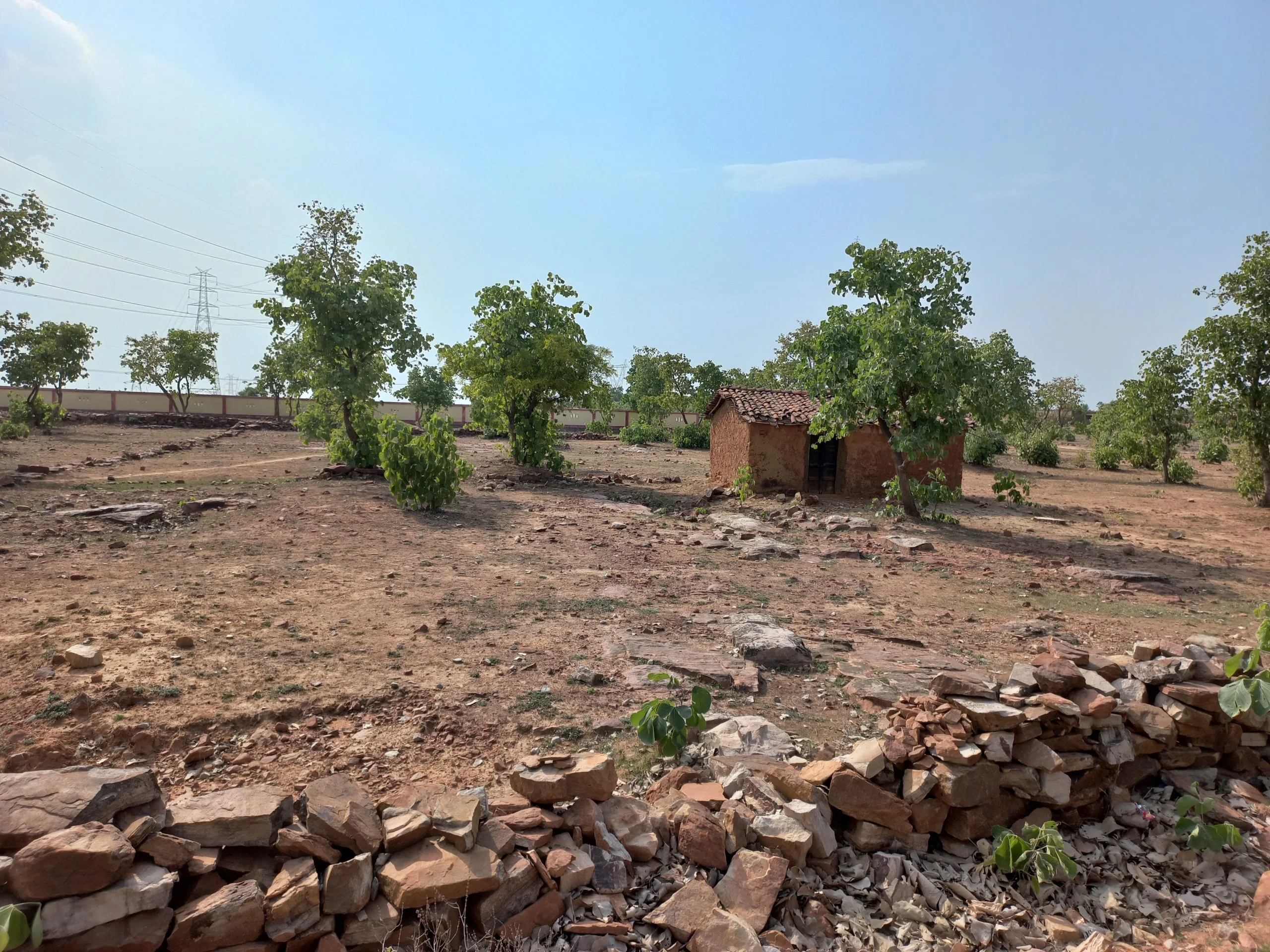
Bakawand block in Bastar district of Chhattisgarh moves at a different pace. Villages here are scattered across dense forests, and distance shapes everyday life. For many families, meeting basic needs itself remains a challenge. In such a context, education often feels distant, not just physically, but as something that belongs somewhere else.
The Transform Rural India (TRI) team of development designers, along with community members, has over the years realised that the challenge is not only about access or infrastructure; it is also about awareness. Our assessments show that many families are navigating their realities without fully knowing where to seek support or how to address the barriers they face. Education, in this sense, remains closely tied to both understanding and access, and the absence of one continues to reinforce the other.
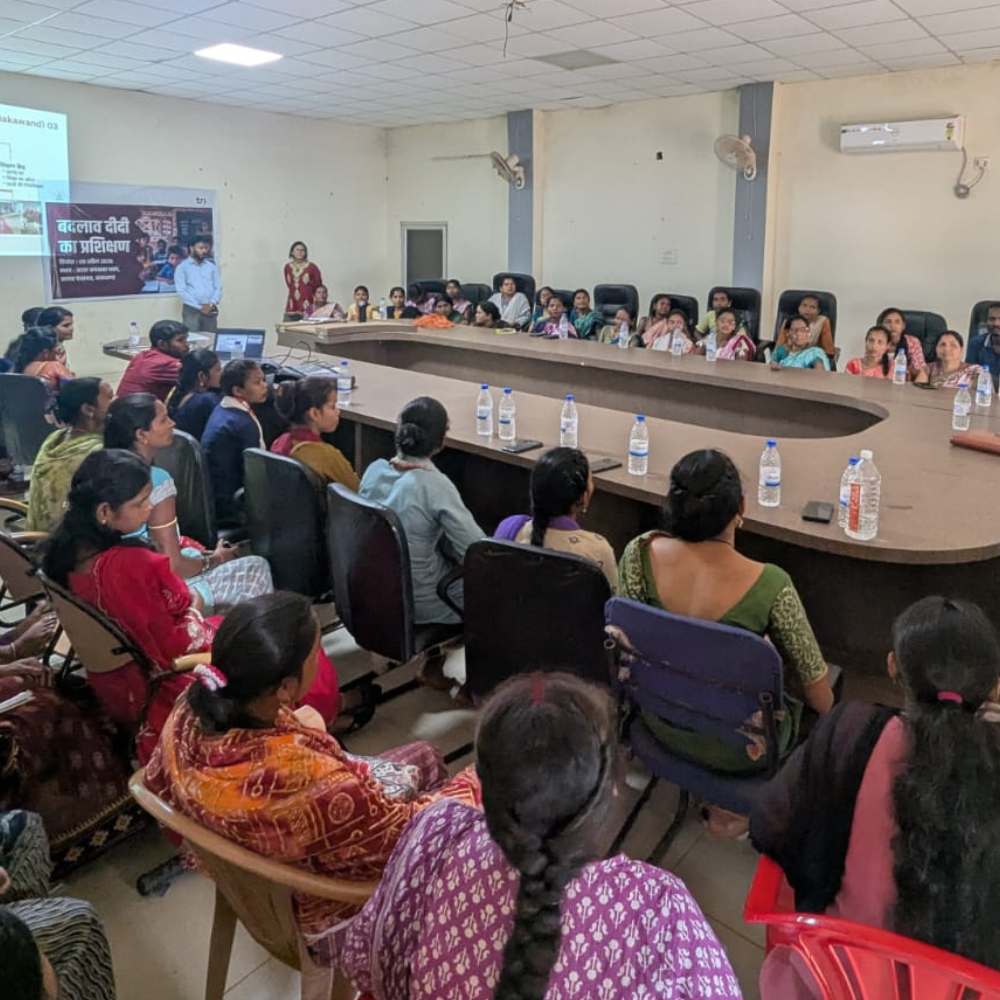
It was against this backdrop that TRI facilitated the organisation of a block-level education event, in close collaboration with community members. The meeting brought together 40 identified Change Vector (CV) Didis, Cluster Level Federation (CLF) leaders, and block officials, including the Chief Executive Officer (CEO) and the Block Education Officer (BEO), onto a shared platform.
What unfolded was more than a structured meeting.
As conversations progressed, the space began to shift. For many CV Didis, education was no longer seen only as schooling. It began to take on a broader meaning: as something that enables thinking, decision-making, and the ability to guide their children’s future.
During the reflection, several Didis shared something more personal. In the everyday demands of managing households, their engagement with their children’s learning often remains limited. Sitting together in this space, many of them recognised this distance—not as neglect, but as a pattern shaped by routine. There was a quiet acknowledgement of their role, not just as caretakers, but as active participants in their children’s education and growth.
One idea that stayed with the group was that of a “Shiksha ka Kona”, a small learning corner within the home. The discussion centred on how even a simple, designated space can encourage children to sit, read, and develop a sense of routine around learning. Some Didis shared their own experiences, where creating such a corner had already begun to make a difference, particularly for younger children, in building both interest and consistency.
At the village level, community libraries (an initiative of TRI), have also begun to take shape. These are community-owned and community-operated learning spaces, designed especially to create access to education for village members, with a strong focus on women. Through shared experiences, Didis spoke about children visiting regularly, showing curiosity, and gradually gaining confidence. These spaces, though modest, are beginning to function as important and accessible learning points within villages.
Listening to these accounts, the CEO reflected on what this could mean at a larger scale. Appreciating the efforts at the community level, he spoke about the possibility of establishing a central library in Bakawand, on the lines of the Lala Jagdalpuri Library. A space that could support more serious learners and aspirants. He pointed out how many young people currently travel 40–45 kilometres, often relocating to towns, simply to access such facilities, and raised an important question: why should this opportunity not exist within Bakawand itself?
There was a growing sense of communities beginning to recognise their role and take ownership, and of systems responding with intent and possibility. Most notably, the Didis expressed a strong interest and eagerness to take this initiative forward—stepping into roles not just as participants, but as leaders of this change. It marked the beginning of a process that is likely to be shaped, sustained, and led by women themselves.
A small but significant step towards making learning more accessible, closer to home, and within reach.