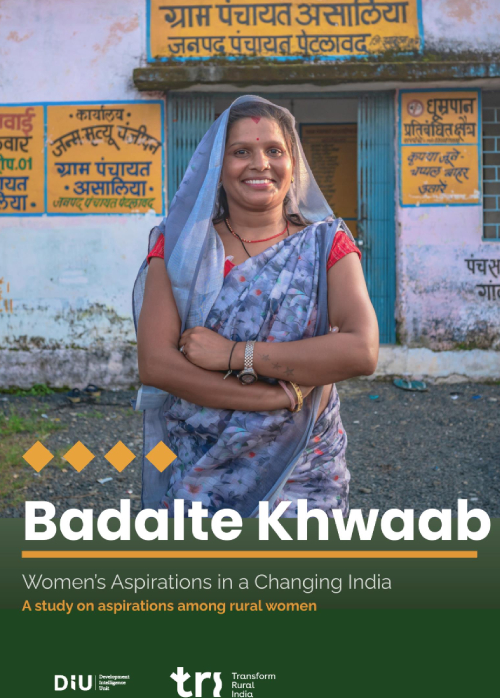
The measure of progress for women and girls is a mix of what they have ‘achieved’, as well as whether they are free to want, choose and pursue lives of dignity on their own terms. A woman‘s aspirations are therefore neither private preferences nor secondary indicators of development. They reveal the possibilities she can see, the rights she feels able to claim, and the constraints that shape her choices. They influence what she is willing to work towards, save for and pass on to her daugh- ters and sons. A survey that records only what women have achieved therefore captures only part of the development story. It risks overlooking where aspirations remain high but opportunities are blocked, where women are negotiating meaningful change, and where prolonged exclusion has nar- rowed the imagination of the possible for some sections of society.