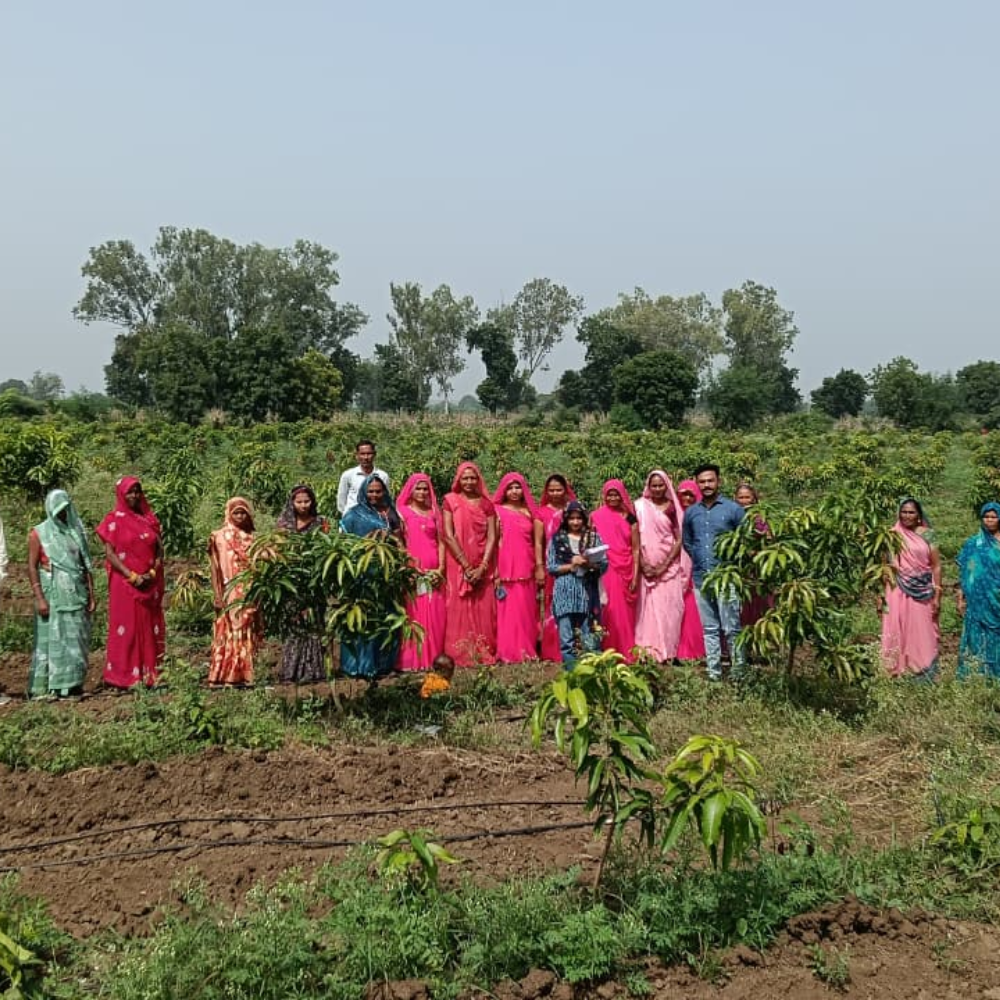
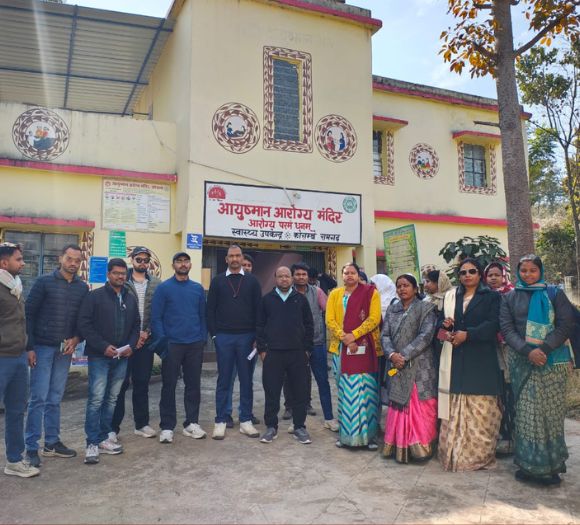
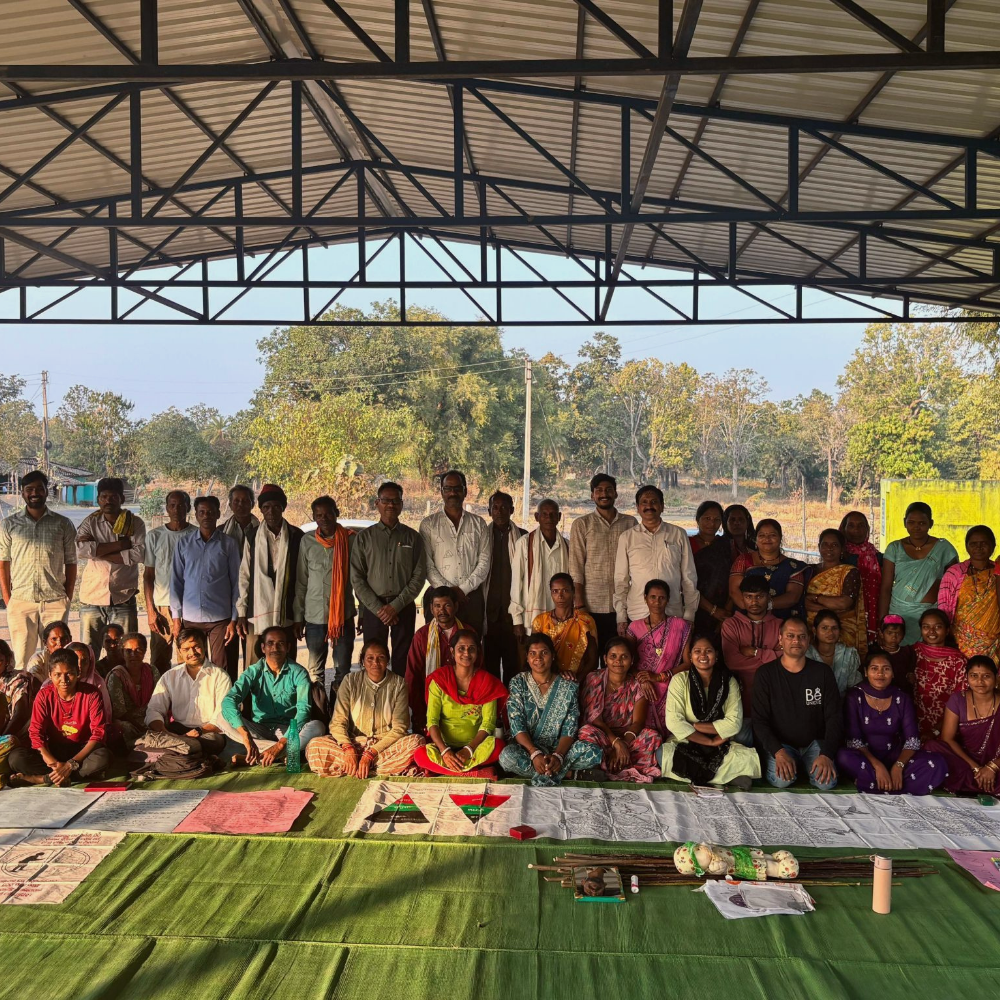
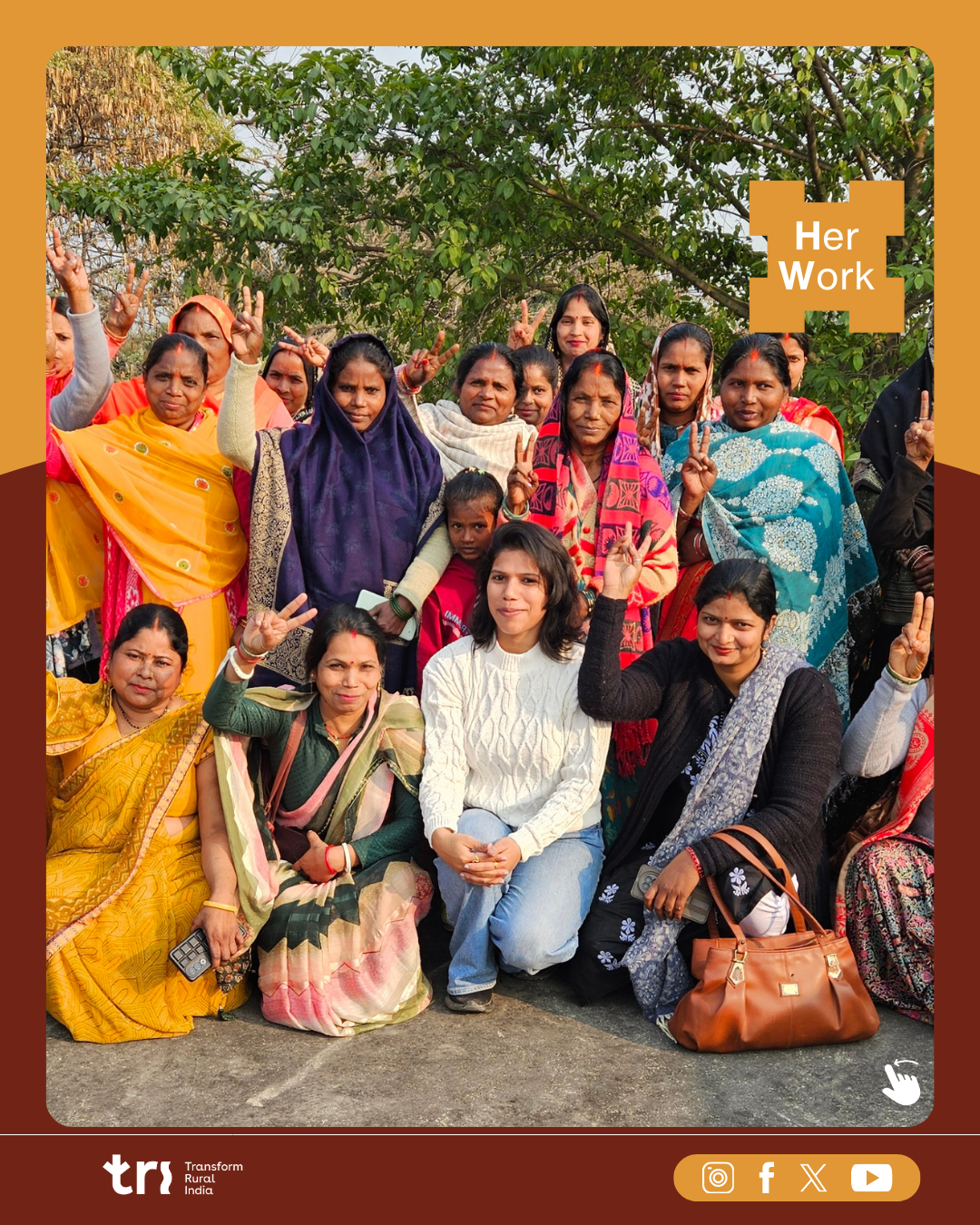
Women in Rajpur Block of Barwani district, Madhya Pradesh, are stepping into a new season of confidence. Through an exposure visit facilitated by Transform Rural India (TRI), Krishi Sakhis and Self Help Group (SHG) members from Village Sali spent a day learning how scientific farming can open the door to better incomes and stronger leadership.
A Beginning Rooted in Barriers
Most of the women on the visit had grown up cultivating traditional, low-return crops. Their knowledge came from what their elders had done, not from scientific training. Limited access to government schemes, little technical guidance, and a sense that horticulture was “not for people like us” kept them confined to the same practices year after year.
The initiative sought to break that cycle by treating women not as labourers on their family fields, but as decision-makers in their own right.
Learning by Seeing, Touching, Asking
The exposure visit brought together a rare mix of people: women farmers, the Senior Agriculture Development Officer from the Horticulture Department, TRI’s field team, and farmer Ashok Barfa, whose thriving mango plantation became the women’s open classroom.
Standing between rows of young mango saplings, the women learned how intercropping can increase income on the same patch of land, how grafting improves fruit quality, and why proper spacing matters for healthy yields. They asked sharp questions, compared notes, examined soil textures, and observed graft points up close. For many, it was the first time they had seen scientific horticulture in action.
TRI acted as the bridge, coordinating the visit, translating technical language into practical tasks, and helping women understand how to access government schemes that support such efforts.
Where Hesitation Turned into Hope
In the beginning, the group carried a quiet hesitation. Scientific farming felt unfamiliar; horticulture felt “risky”. But the turning point came when they watched a demonstration of grafting and realised it wasn’t a skill reserved for experts, it was something they could learn, teach, and replicate.
One participant summed it up neatly: “If Ashok ji can do it on this land, why can’t we do it at home?”
By the end of the visit, women who had arrived with doubts were discussing how many saplings their SHGs could collectively invest in. Several promised to share their learnings at upcoming Village Organisation meetings, signalling a shift from passive participation to ownership.
A Small Visit, A Larger Shift
The exposure visit did more than introduce new techniques. It gave women the confidence to imagine different income pathways, mango orchards, intercropping patterns, grafted saplings, and government-linked horticulture schemes suddenly felt within reach.
Krishi Sakhis from Barwani returned home ready to experiment, ready to teach, and ready to stretch the boundaries of what women’s farming can look like in their villages.
A Step Toward Flourishing Rural Futures
Through this ongoing initiative, TRI and its partners are helping build rural ecosystems where women’s knowledge, leadership, and experimentation shape the direction of their communities. Every intercropped field, every grafted sapling, and every confident SHG meeting becomes a thread in the larger fabric of a flourishing rural locality, one led not by external experts, but by women themselves.