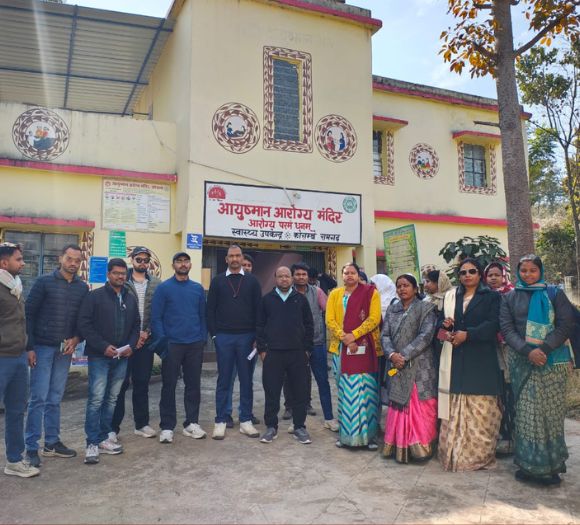
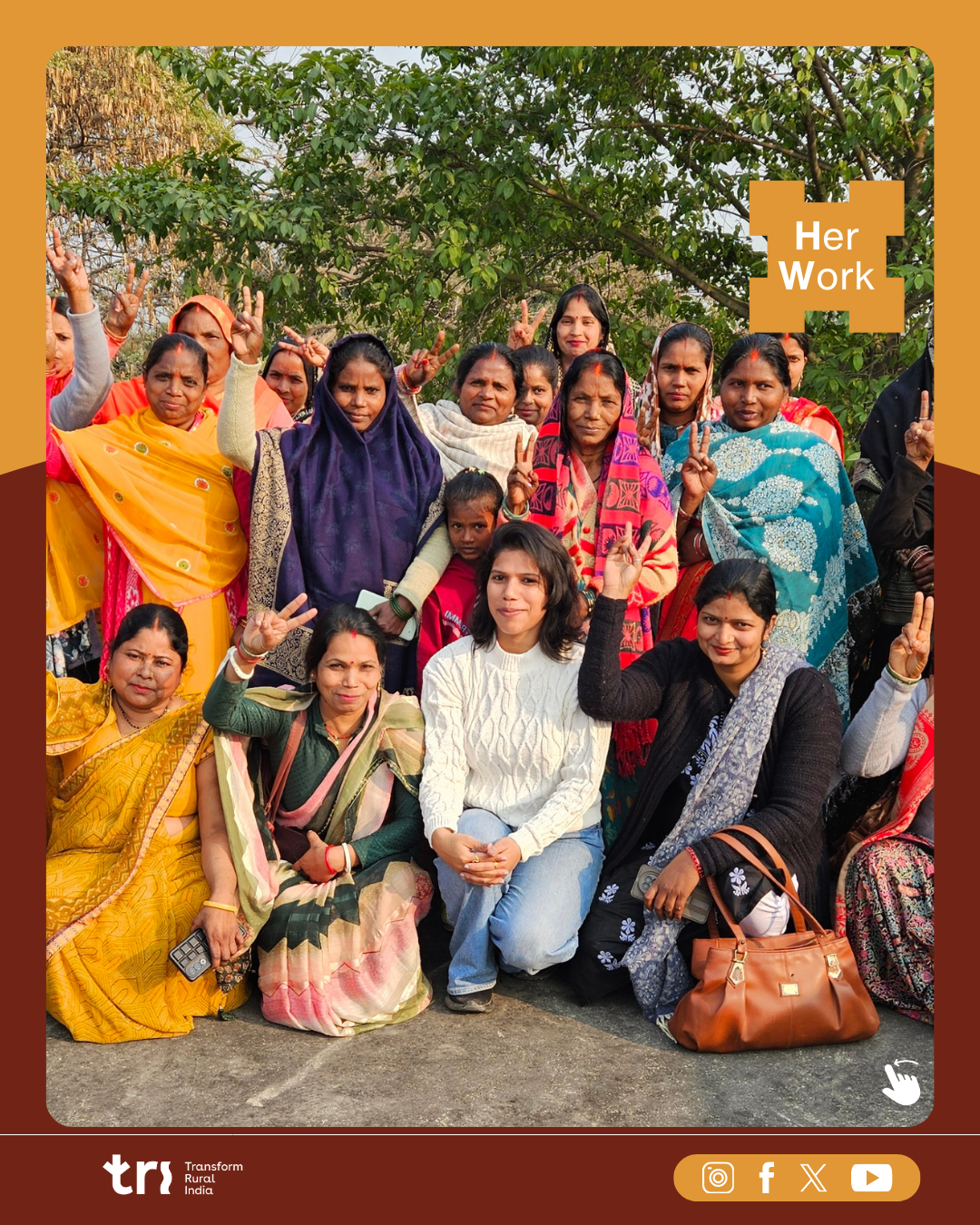
In Deel Usari Gram Panchayat of Koraon Block, Prayagraj district, Uttar Pradesh Dharmshila from the Udaan Cluster Level Federation (CLF) has emerged as a trusted anchor for community health. Known locally as a Badlaav Didi or Change Vector, she is not just raising awareness on health and nutrition but actively redesigning how care reaches women and families in her village.
Dharmshila’s journey began with a village-level visioning exercise facilitated by Transform Rural India (TRI). Rather than introducing a predefined solution, the process invited community members to reflect on the challenges they lived with and the change they wanted to lead. This exercise allowed villagers to come together and define development goals, at three levels – individual, community and at the village level. Dharmshila stepped forward with clarity and conviction. She chose health as her focus area, shaped by memories from her childhood of women struggling with poor sanitation, delayed care, and preventable health complications. Her willingness to lead marked the first step in building a locally rooted change ecosystem.
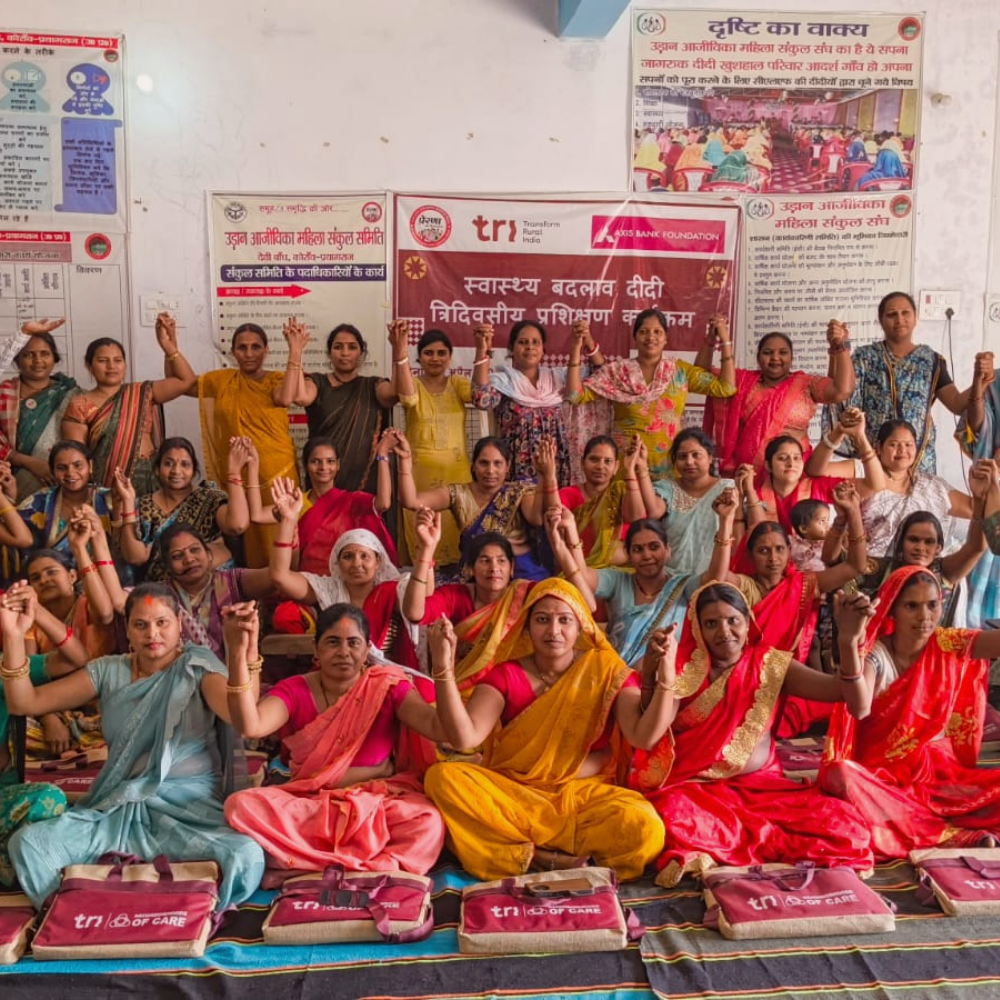
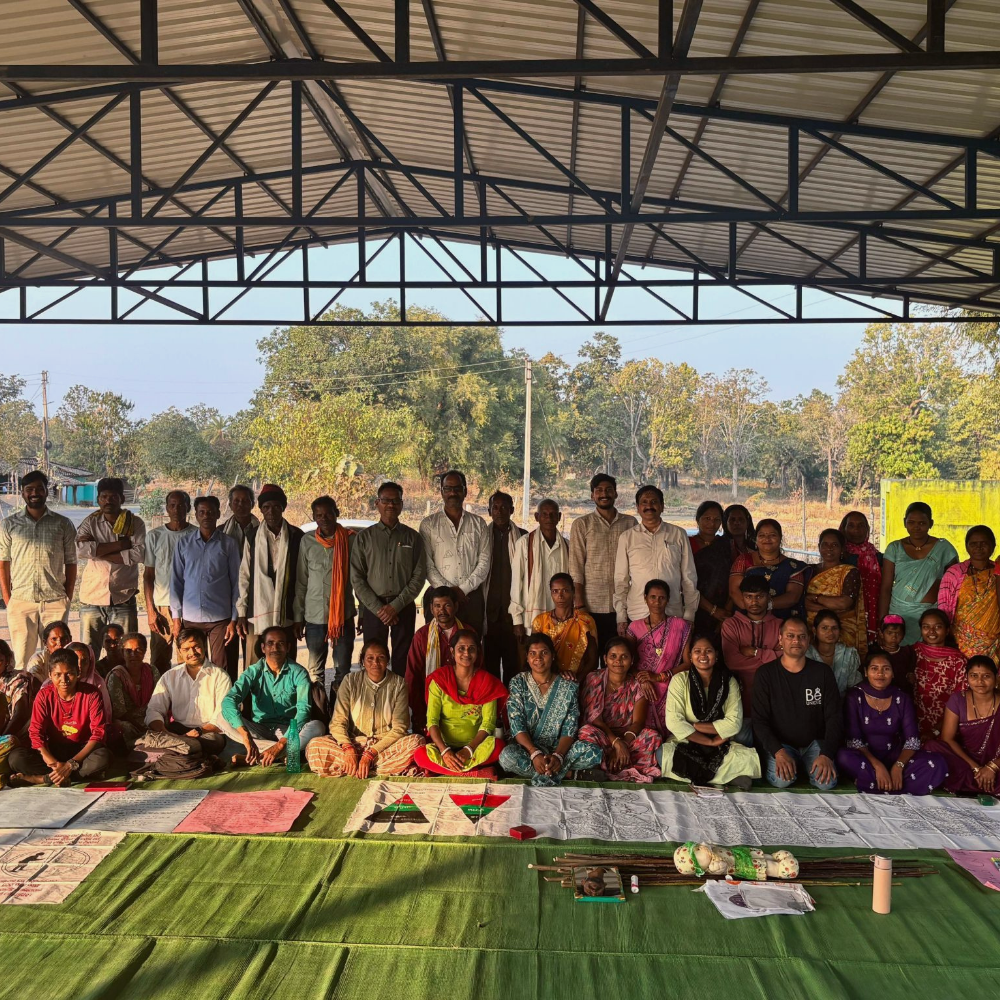
Through the Change Vector training, TRI worked with Dharmshila and other community leaders to strengthen their role as frontline change agents. The training introduced her to the Neighborhoods of Care model of TRI, a people-centered approach that shifts health systems from being facility-dependent to community-led. The model emphasizes early identification, shared responsibility, last-mile facilitation, and coordination between families, community volunteers, and formal health workers. For Dharmshila, this reframed care not as an occasional intervention but as a continuous, collective practice embedded in everyday village life.
Subsequent trainings, including the Village Health Sanitation and Nutrition Day capacity-building sessions in July 2025, further strengthened her ability to navigate systems, mobilize women, and ensure that services reached those who needed them most. These trainings brought together CLF Social Action Committee members, Food, Nutrition, Health, and WASH (Water, Sanitation, and Hygiene) cadres, and Change Vectors, allowing Dharamshila to know about the health ecosystem and all its players. Confidence, however, is only meaningful when tested in real moments of need.
That moment came during Diwali. When a pregnant woman in the village went into labor, Dharmshila acted immediately. Applying the principles she had internalized through training sessions by TRI, she coordinated with the ASHA worker, accompanied the woman to the government hospital, and stayed with her through more than eight hours of labor. Her presence ensured timely care, emotional support, and continuity between the community and the public health system. Both mother and child returned home safely.
Dharmshila’s story illustrates how systems change takes root when leadership is designed from within communities. The Neighborhoods of Care approach comes alive through women like her, who translate training into trust, knowledge into action, and intent into impact. When local women are equipped to lead, health systems become more responsive, dignified, and humane. One safe delivery at a time, Dharmshila is helping redesign what care looks like in rural India.