A courtyard in Petlawad, late afternoon. The heat hasn’t broken yet. A circle of women sits on the ground, one of them tapping a rhythm on her knee while the others hum, testing a line, changing a word, testing it again. There’s no stage, no audience, just the sound of a song being built from nothing. This is where Project Mandli lived, long before it ever reached a camera.
Project Mandli was a collaboration between Transform Rural India and Justice Adda’s Anthems for Justice initiative. As development designers, our starting point is rarely a message we want communities to receive. It’s a question we want them to answer for themselves. Here, the question was: what if rural women wrote gender justice into their own songs, in their own words, instead of hearing it explained to them?
It began online, with workshops that weren’t about songwriting at all, not at first. Before a single line took shape, the Justice Adda team asked the women of Petlawad and Manawar simply to talk. About gender. About how climate change lands differently on women than it does on men. About financial security and relationships and the quiet weight of expectation that follows a woman through her whole life. Slowly, over weeks, those conversations turned into stories. And the stories, without anyone forcing it, began turning into verse.
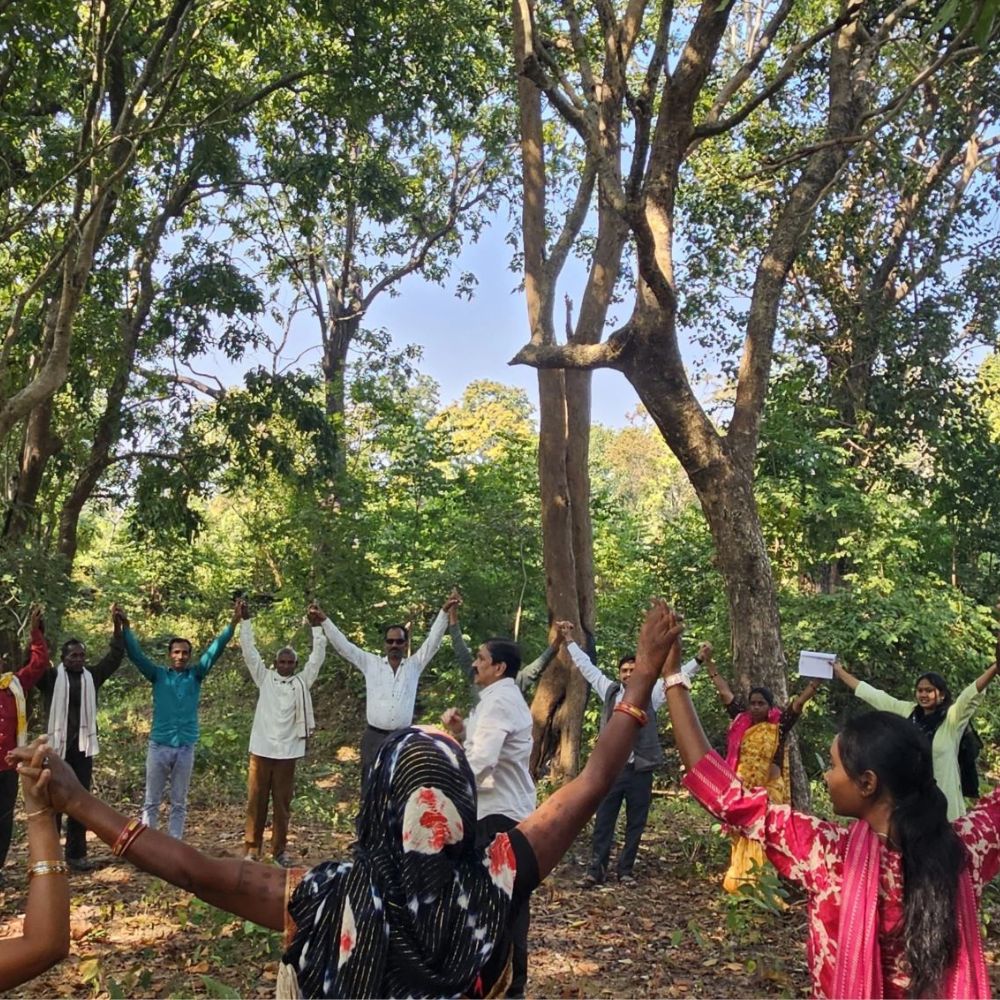
Then came the block-level workshops, offline this time, where the real shaping happened. Every line was argued over, rewritten and rewritten again, until it belonged fully to the woman who’d said it. Nothing here was handed down. Everything was earned.
Some of what surfaced in these sessions wasn’t easy to say out loud. Personal struggles that had been carried quietly for years found their way into the open, some for the first time. There were tears in that room. There was also, unmistakably, courage.
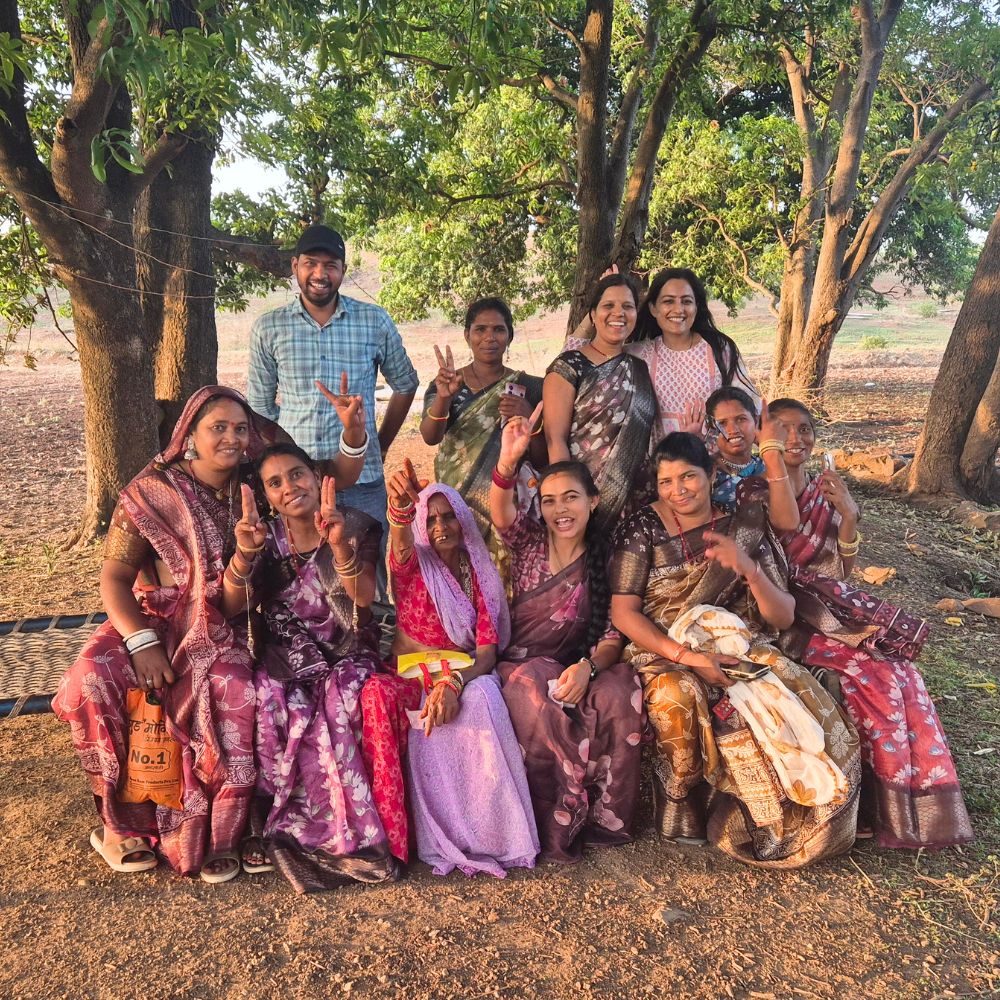
After the writing came rehearsal, dozens of them, some in courtyards, some under a tree, some indoors when the heat got too much. A verse would be dropped, then brought back a week later because someone insisted it was the truest line in the whole song. Voices that had never performed for more than a handful of neighbours began finding pitch, timing and, slowly, confidence. And after rehearsal came the day none of them had quite prepared for: the shoot.
For most of the Didis, a professional camera was something entirely new. Nerves, careful preparation and an excitement that comes from being seen not as a participant in someone else’s programme but as a performer in her own right. Then the camera rolled, and something in the room changed. They didn’t sing like first-timers. They sang like women who had been waiting a long time for someone to listen.
One song carries that spirit in its title alone: Sun Samaj, Sun. Ek Mahila Ki Kahani Sun. Listen, society. Hear a woman’s story.
I wasn’t in front of that camera. I was behind it, coordinating logistics, sitting through every rehearsal, managing the small chaos of shoot day, the retakes, the nerves, the moments someone needed water or a minute alone before going again. It wasn’t glamorous work, but it meant I got a front-row seat to something rare: conversation becoming music, and music becoming something that could travel far past the room it started in. From the first workshop to the final frame, it was months of learning, patience and, more often than I expected, quiet emotion. Watching that shift, from women in a workshop to women who wrote, composed and performed their own songs, was the most enriching part of this project for me.
What Project Mandli taught me is simple and hard to forget: give people room to speak and their lived experience becomes one of the most powerful tools for change we have.
The Didis were never simply given a mic.
They found their voice, and decided for themselves what the world should hear.