A smallholder farmer in Jhabua district of Madhya Pradesh can grow a perfectly good crop of soybean and still have almost no say in what it sells for.
It is not the weather that decides her price, nor the quality of her seed, nor the hours she has spent bent over the field. It is size. One family’s few quintals will not interest a processor who needs to fill a truck, so the crop goes to whoever turns up in the village with cash, at whatever rate he names that week. She can take it or leave it, and she cannot afford to leave it.
At sowing time, the arithmetic turns against her again. Seed, fertiliser and pesticide bought one sack at a time cost more than the same goods bought by the tonne. The farmer with the least land ends up paying the most per kilo and earning the least per quintal.
Good rain cannot break this cycle, and neither can harder work. Only volume can, and volume is the one thing a household with two or three acres will never have on its own. Unless 1,280 households decide to pool it.
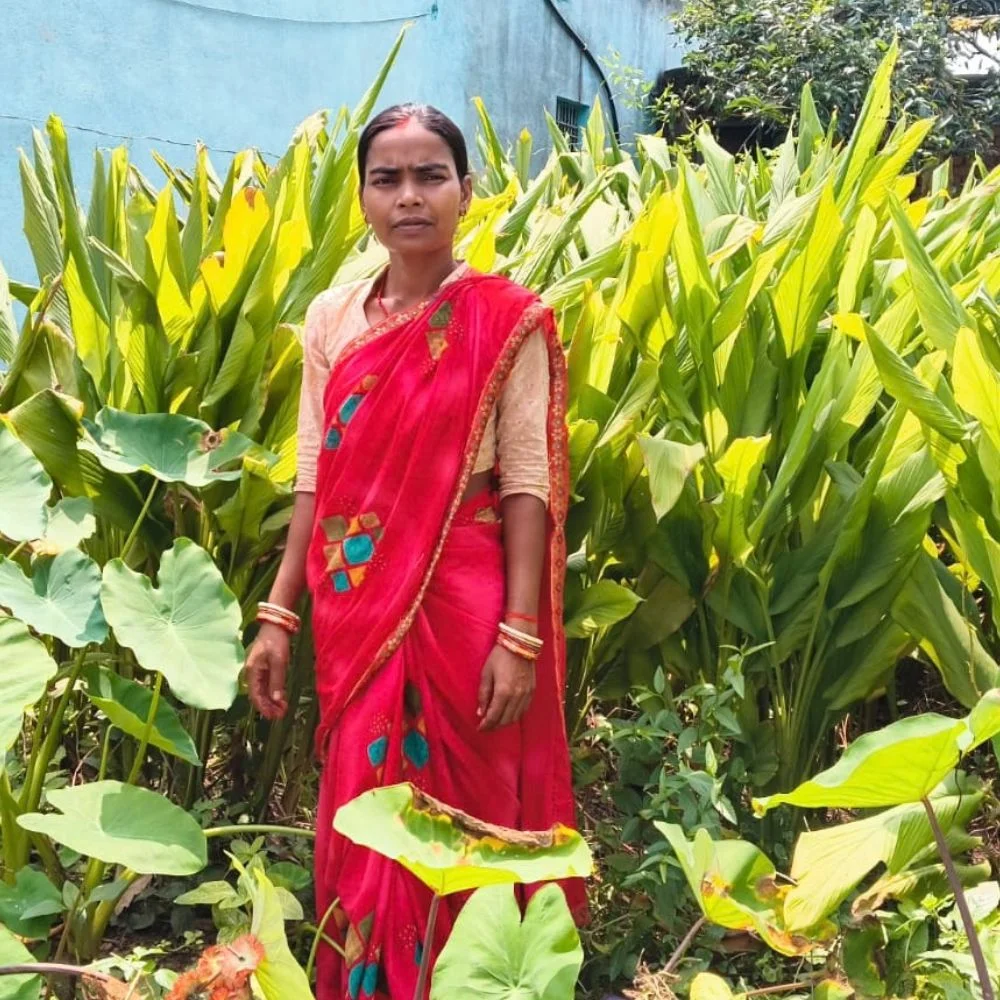
Krishna Bhawan Jhabua Aadiwasi Mahila Kisan Producer Company Limited is what happened when they did.It is a Farmer Producer Company (FPC), which means it is a company in the ordinary legal sense, with directors, accounts and shareholders, except that here the shareholders are the farmers themselves. There are 1,280 of them, all Adivasi women, in a district where the 2011 Census recorded 87 per cent of the population as Scheduled Tribe.
Bought by the Tonne, Sold by the Truckload
The company buys inputs in bulk and passes them on to members at rates none of them could negotiate individually: seed, fertiliser, pesticide, spray pumps, mulching material and drip irrigation sets. Drip and mulch decide whether a field can carry a summer vegetable crop at all, and they are usually the first things a cash-strapped farmer goes without.
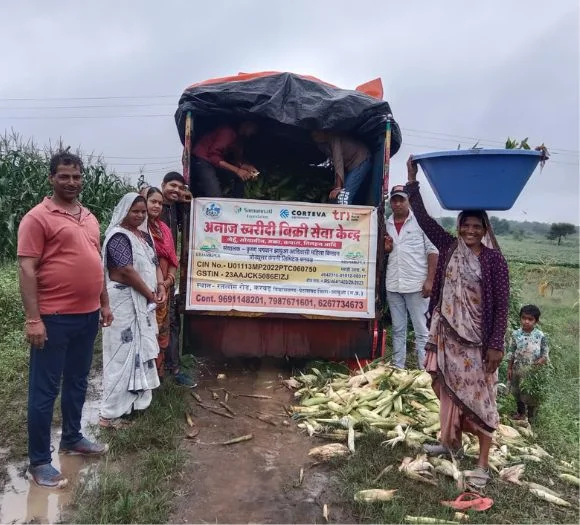
At harvest, it procures members’ produce and sells it in volumes large enough to be worth a buyer’s attention. It handles the crops the district has always grown, namely soybean, wheat and cotton, and three it has not: sweet corn, marigold and watermelon. These pay considerably better per acre, but they are perishable or need a particular buyer, and a farmer will not plant them in the hope that somebody turns up at harvest. Knowing the company will buy her crop changes that calculation.
That assurance rests on the buyers the company has brought in, among them Malwa Frozen, Omni Active and Indus Mega Food Park, alongside local traders. Its inputs come through tie-ups with Syngenta, Namdhari, Paras Seeds, Partec Seeds, Aquarius, Star Agri, Parts Genetics and Bhandari Agro.
A Sixteenfold Harvest
The company turned over ₹7 lakh in 2022–23, ₹20 lakh the year after, ₹68 lakh in 2024–25 and ₹1.16 crore in 2025–26. That is a little over sixteenfold growth across four financial years. This year’s turnover stands at ₹80 lakh so far, against a target of ₹3 crore set by the board. Each rupee of that turnover represents a crop that moved through the collective, which is to say a sale a member made with the company behind her.
A lean team with strong partners
All of this is run by two people. The company employs a chief executive and an accountant, while governance rests with a five-member board drawn from the five original promoters. Its outreach extends to about 2,000 farmers, of whom the 1,280 shareholders are the owners.
Institutions already present in the district carry much of the technical work. The company works with the agriculture and horticulture departments, the Agricultural Technology Management Agency (ATMA), the local Krishi Vigyan Kendra and veterinary services. Between them, they supply the training, technical advice and scheme access that a two-person office could not provide by itself.
Where TRI Comes In
The Transform Rural India’s (TRI) team of development designers has supported the FPC along the way, working to strengthen the institution itself as much as its business. TRI’s role has centred on building the capacity of the board, staff and members to run the company well, through regular training. It has also helped the company understand which markets offer the right price for which crop, so that decisions about what to grow and where to sell rest on information rather than guesswork. The aim is a company its members can run confidently on their own, long after any outside support has stepped back.
The Next Harvest
The company’s plans for the coming years extend the same principle. It wants to widen its shareholder base beyond the present 1,280 and deepen its reach across Jhabua and neighbouring blocks, so that more of the 2,000 farmers it already serves become its owners.
Storage and basic processing come next. Produce that cannot be stored has to be sold when everyone else is selling. Storage capacity would let members wait for a better price while cutting post-harvest losses. Custom hiring of farm equipment is planned alongside, giving members the use of machinery none of them could buy individually. More processors, food parks and institutional buyers are to be brought in, and staff will be added as volumes grow.