My journey into development work has been shaped by a deep curiosity about people’s lived realities and a belief that meaningful change must come from within communities. Growing up with the works of Mahasweta Devi, Manik Bandopadhyay, and Nabarun Bhattacharya, I was drawn early to literature that refused to look away from the struggles and dignity of marginalized communities.
But reading was not enough. After completing my Masters, I knew I did not want to limit myself to the margins of a page. I wanted to be more directly connected with people, across different geographies, understanding their aspirations and challenges from the inside.
That search led me first to Odisha, where I spent two years embedded in the education ecosystem, working with government systems, schools, and communities to strengthen foundational learning and reduce dropouts. It was meaningful work, but it also revealed to me the limits of top-down approaches. I began to feel the need for a different kind of engagement, one that placed community agency, not external expertise, at the centre.
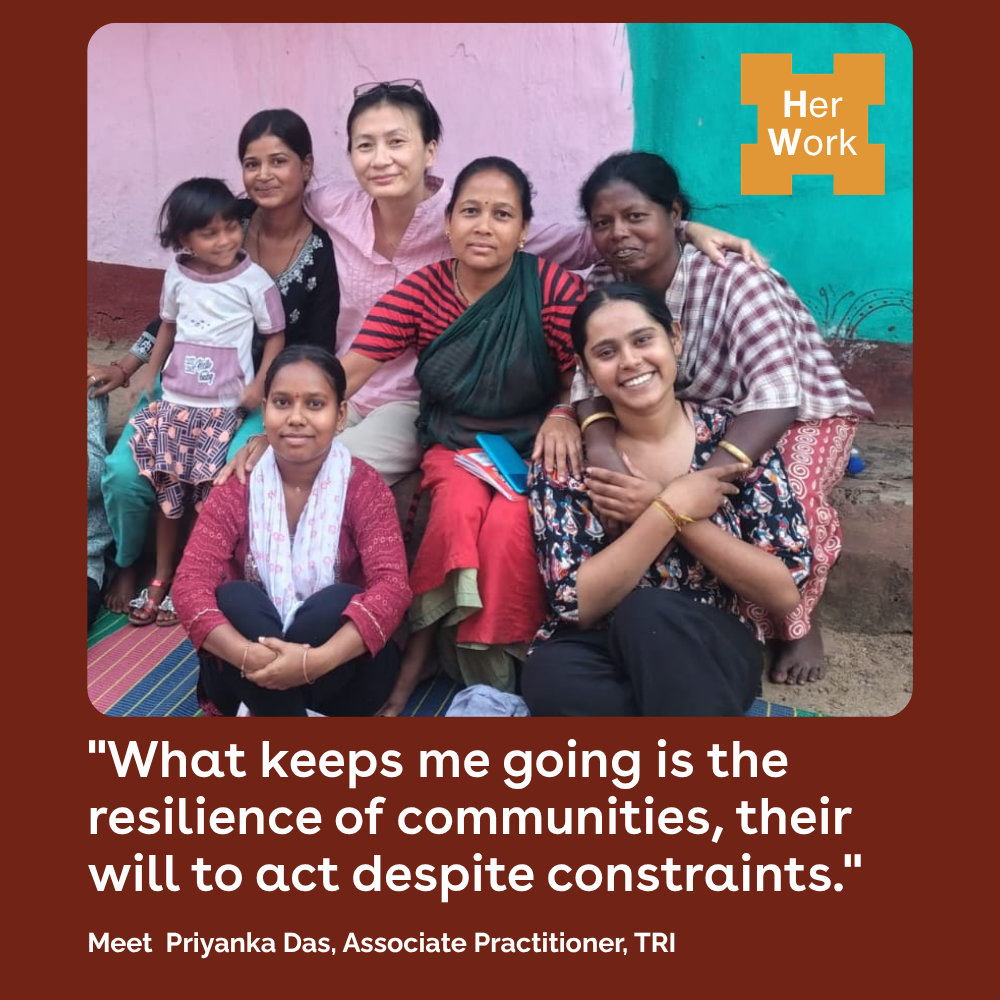
In July 2025, I joined Transform Rural India (TRI) and have since been working in the Noamundi block of Jharkhand. What drew me to TRI was its commitment to working with communities, where change is not delivered but co-created.
Early in my posting, I found myself sitting in Executive Committee (EC) meetings of a Cluster Level Federation (CLF) in a particularly interior area, often feeling like the only voice in the room. A few familiar faces would respond, but most women stayed silent. It was discouraging, I began to question my own approach.
Over time, I made a deliberate shift. Rather than gravitating toward spaces where engagement came more easily, I chose to stay with the ones that required more patience. I reflected on my own assumptions and began making small efforts to build genuine connections including learning a few words in Ho, the local language spoken by the community.
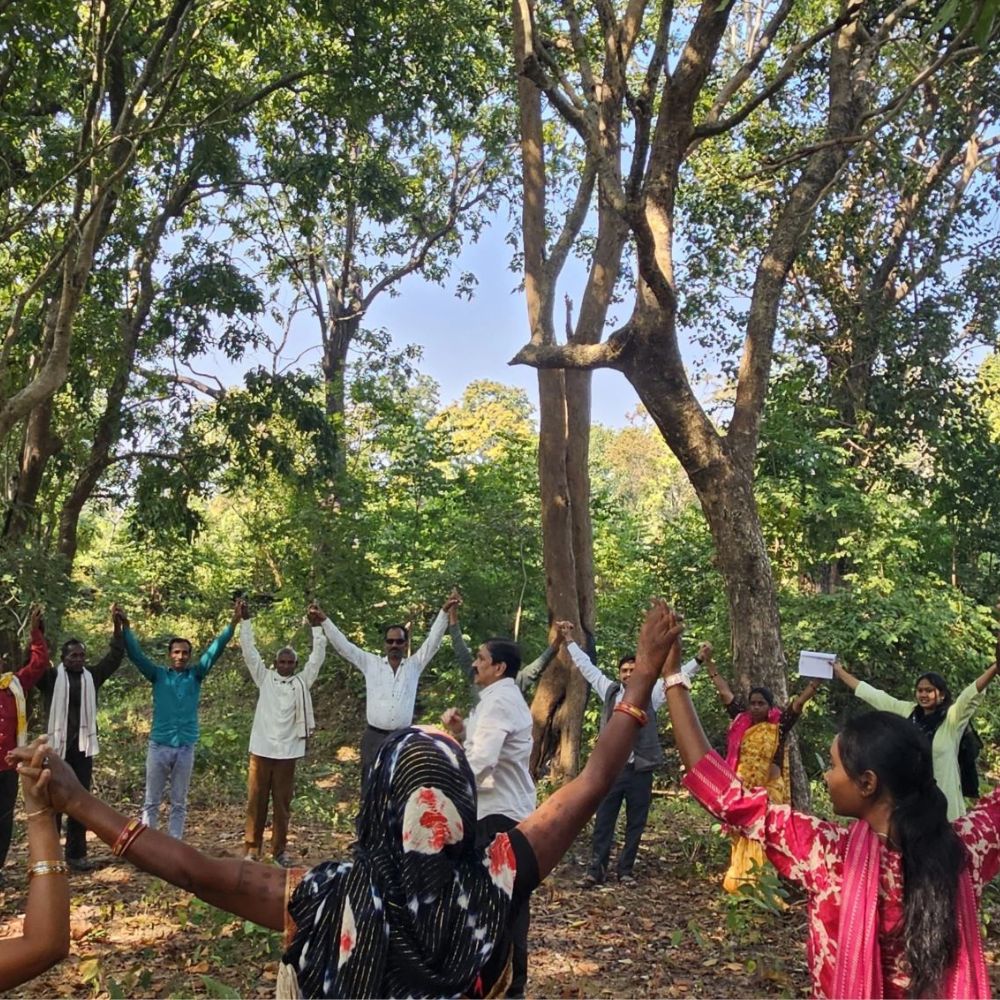
Then, during one monthly EC meeting, I introduced myself entirely in Ho. The response was immediate. There was laughter, clapping and a visible shift in the room as though something that had been held at a distance had quietly moved closer. Women who had never spoken directly in meetings before began to share their thoughts. Participation grew and that same CLF, which had once felt so difficult to reach, went on to actively contribute to their own planning processes, with members taking ownership of their roles in ways I had not seen before.
What stayed with me was not just the improvement in participation, but what it taught me about my own role. Change often begins with small shifts in how we show up. Sometimes, it is not about asking why something is not working but about pausing to ask what we can do differently to build trust and connection.
One of the most enduring lessons from this work has come through observing a Village Organisation in Barajamda. What began as a space largely focused on financial discussions slowly evolved into something more, a platform where women started engaging with broader village issues and taking collective action.
A significant shift came after the block visioning exercise, which brought together community institution members, local administration, and Panchayat representatives. This process led to the formation of the Gram Panchayat Coordination Committee(GPCC), which the community named Graam Vikash Manch and strengthened coordination at the Panchayat level in ways that felt genuinely owned.
It was within this context that the women of the Barajamda VO took a remarkable initiative. They identified a growing concern of children being absent from school for long periods, with some dropping out entirely. Moving beyond their routine discussions, they reached out proactively to the school, coordinated with the head teacher and the School Management Committee, and accessed a list of long-absent and dropout students. Understanding that no single group could reach every household alone, they used their Self Help Group (SHG) network to divide the responsibility across tolas. Through this collective effort, they were able to reach families, initiate conversations and counsel parents. Within a short period, around 45 to 50 children had reconnected with schooling.
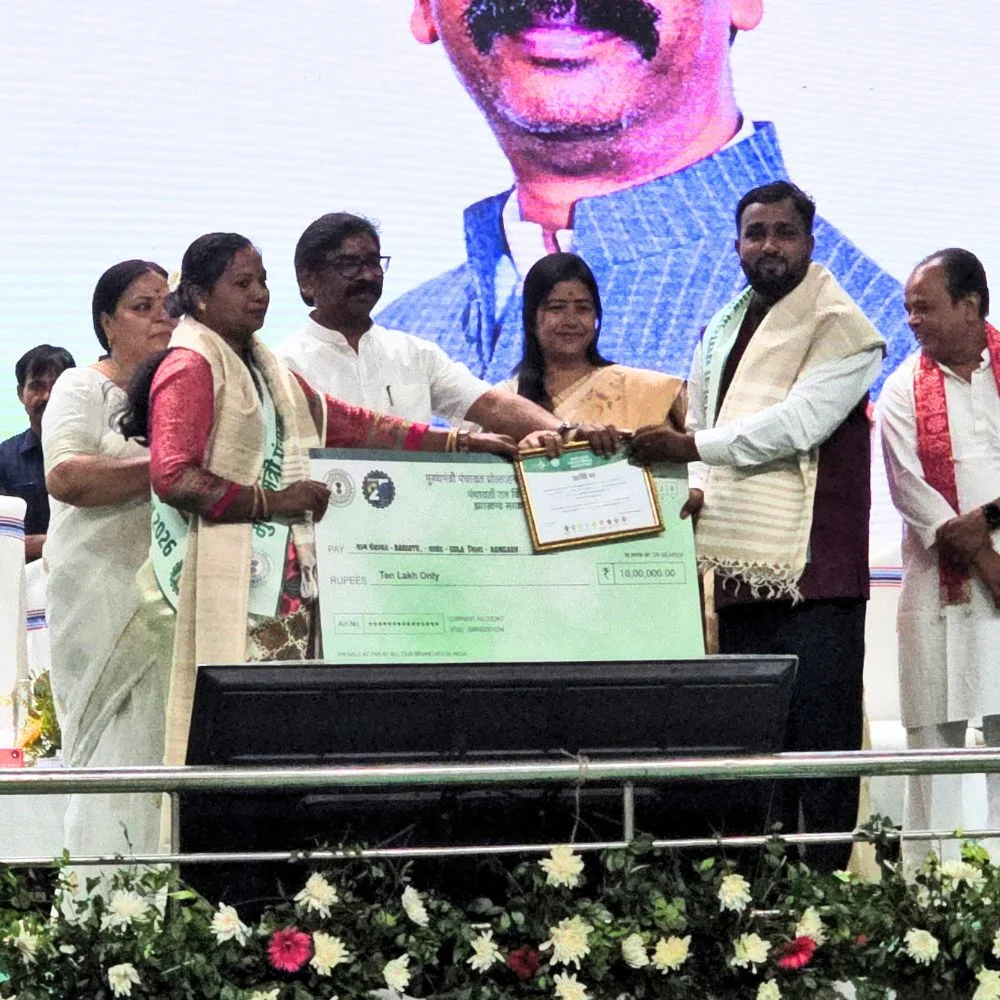
What made this even more powerful was how it expanded. The Panchayat Mukhiya, Pyarvati Devi, herself part of the community institution, stepped in and strengthened the effort further. A Gram Sabha was organised, bringing together the community, local leadership, and external support from an organisation working in education. This was followed by door-to-door engagement, reinforcing the importance of education at the household level.
In this whole process, my role and that of my colleagues as development designers was simply to nudge, to ask the right questions at the right moments. The rest, the community did entirely by itself.
This work has taught me that rural India cannot be understood through a single narrative. It is complex, diverse and deeply rooted in local contexts. Solutions cannot be imposed, they must emerge from within communities, supported by systems that enable rather than control.
On a personal level, this journey has made me more patient, more reflective and more aware of my own assumptions. It has shifted me from wanting quick results to valuing long-term processes. I have learned that trust is not something you achieve once it is something you nurture every day.
My hope is to see communities that are confident in their own voice and capable of engaging with systems on equal footing. I hope for local institutions that are strong enough to sustain change independently, in governance, livelihoods, education, and beyond. Ultimately, I hope for a future where development is not something done to communities, but something designed, practised, and led by them.