In Khinda village in Simdega district, Jharkhand, families live close together. Grandparents, parents, and children share the same courtyards, the same meals, the same daily rhythms. And yet, in recent years, something had quietly begun to shift. Conversations between generations had grown shorter. Stories that elders carried were rarely told. Parents and children living under the same roof were, in many ways, growing distant from each other.
This was not unique to Khinda. Across rural communities, families are navigating new pressures, economic uncertainty, changing roles, and the competing demands of everyday life. These pressures often leave little room for the kind of unhurried conversation that holds families together.
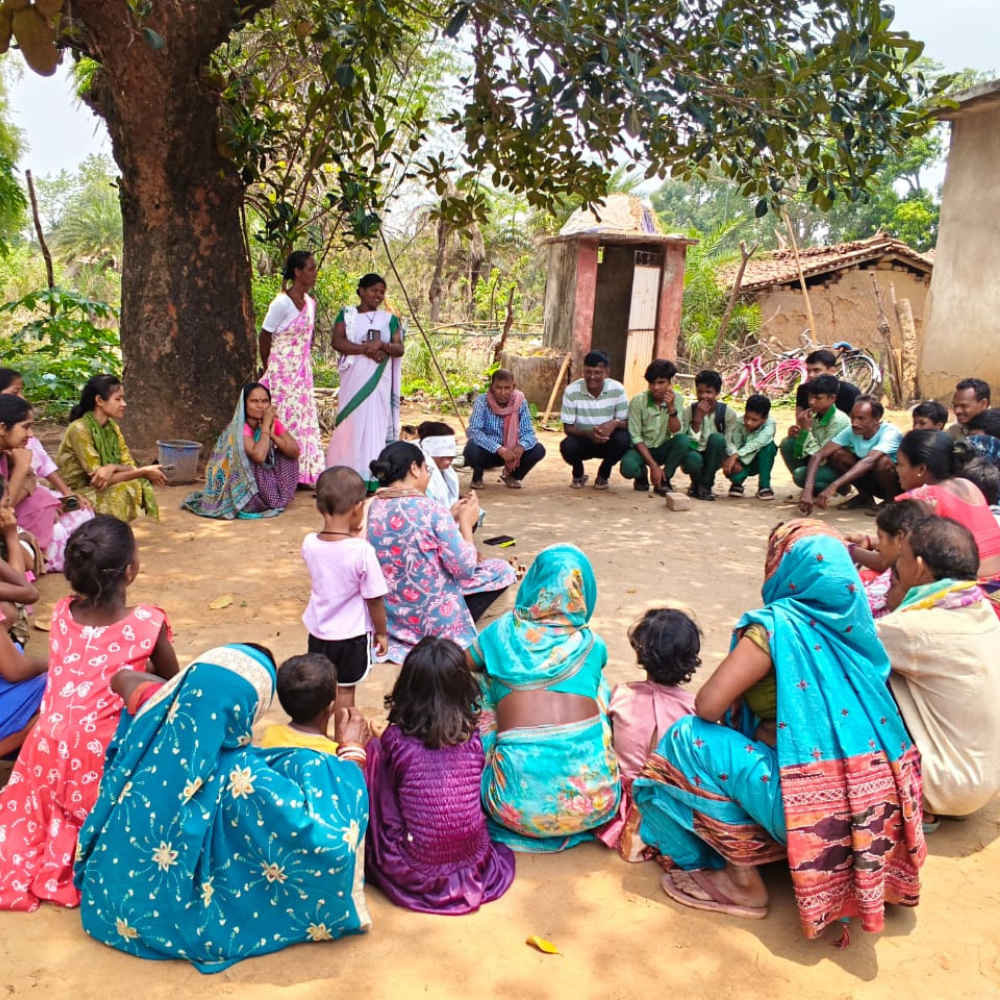
It was in this context that the International Day of Families was observed in Khinda on 15 May 2026, under the Neighbourhoods of Care (NoC) initiative supported by Transform Rural India (TRI). The programme brought together children, parents, grandparents, adolescents, village leaders, members of the Jan Adhikar Samiti (JAS), and Panchayati Raj Institution (PRI) representatives for a two-hour gathering focused on one question: what does it take for a family to be strong?
TRI’s work through the NoC initiative is grounded in the understanding that child wellbeing cannot rest on the shoulders of parents alone. It requires the active involvement of the wider community. The programme in Khinda was designed with this in mind, creating a space for the community itself to reflect, share, and draw its own conclusions, rather than receiving answers from outside.
The session began with village leaders opening up about their own childhoods. The Mukhiya of Khinda spoke about the hardships his family had faced, the sacrifices that shaped him, and the values he had inherited from his parents. Former Mukhiya Fransis Dada shared similar reflections on the role family had played in building his sense of purpose and resilience. Their willingness to speak openly created room for others to do the same.
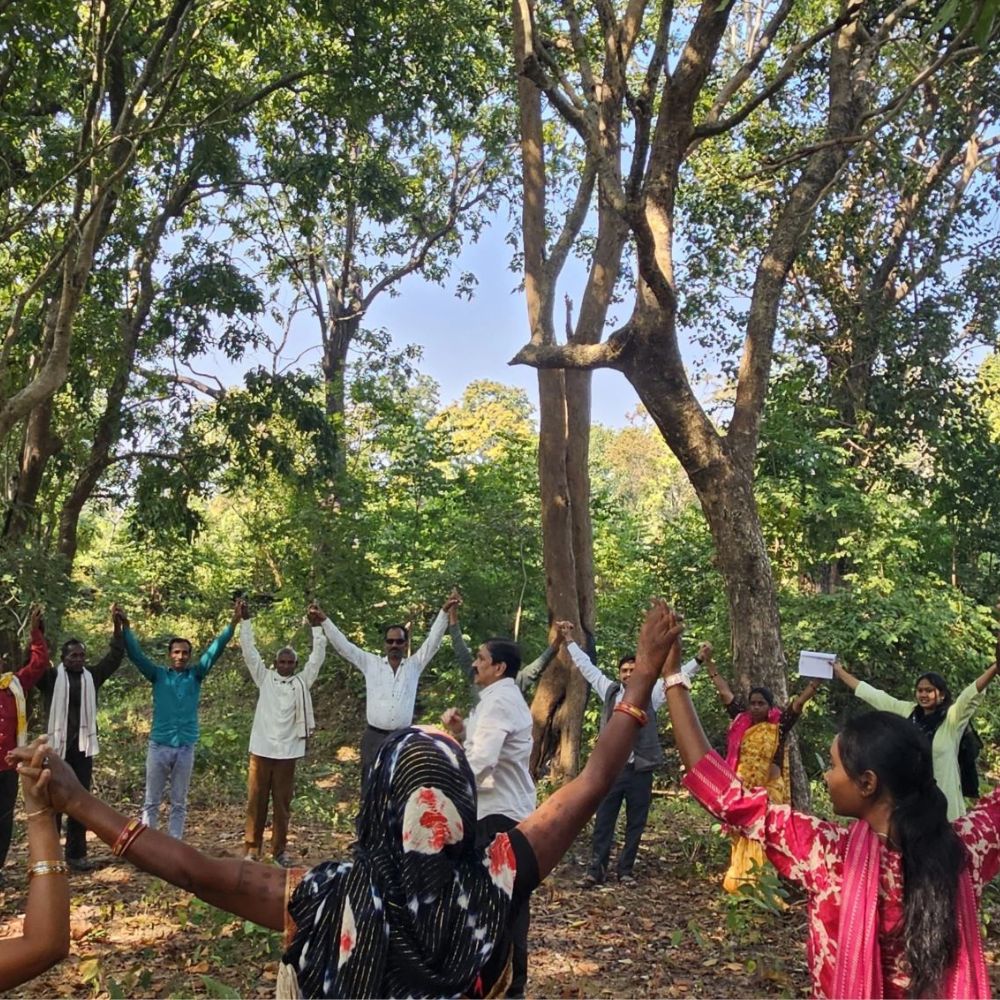
What followed were activities designed to make these ideas tangible. In one, a grandfather and grandson, a mother-in-law and daughter-in-law, and a mother and son participated together in a blindfold activity that asked each pair to guide and trust one another. The exercise was simple, but what it surfaced was not. Participants spoke afterward about how rarely they practised that kind of attention toward the people closest to them.
Elders were also invited to share their knowledge of traditional foods and family practices that had, over time, quietly disappeared from daily life. Younger participants listened in ways they had not before. Several grandparents later remarked that they had not expected people to sit and genuinely want to hear their stories.
Throughout the programme, TRI’s role was to support the design and facilitation of these conversations, and to help the community connect individual experiences to a broader understanding of what families and communities can offer each other. The reflections that emerged were the community’s own.
By the end of the gathering, participants had arrived at something that no external speaker had told them. They concluded, in their own words, that a family does not end at the walls of a house. That when neighbours look out for each other’s children, when elders are given space to share what they know, when young people understand the journeys of those who came before them, an entire village can hold a child in the way a family does.
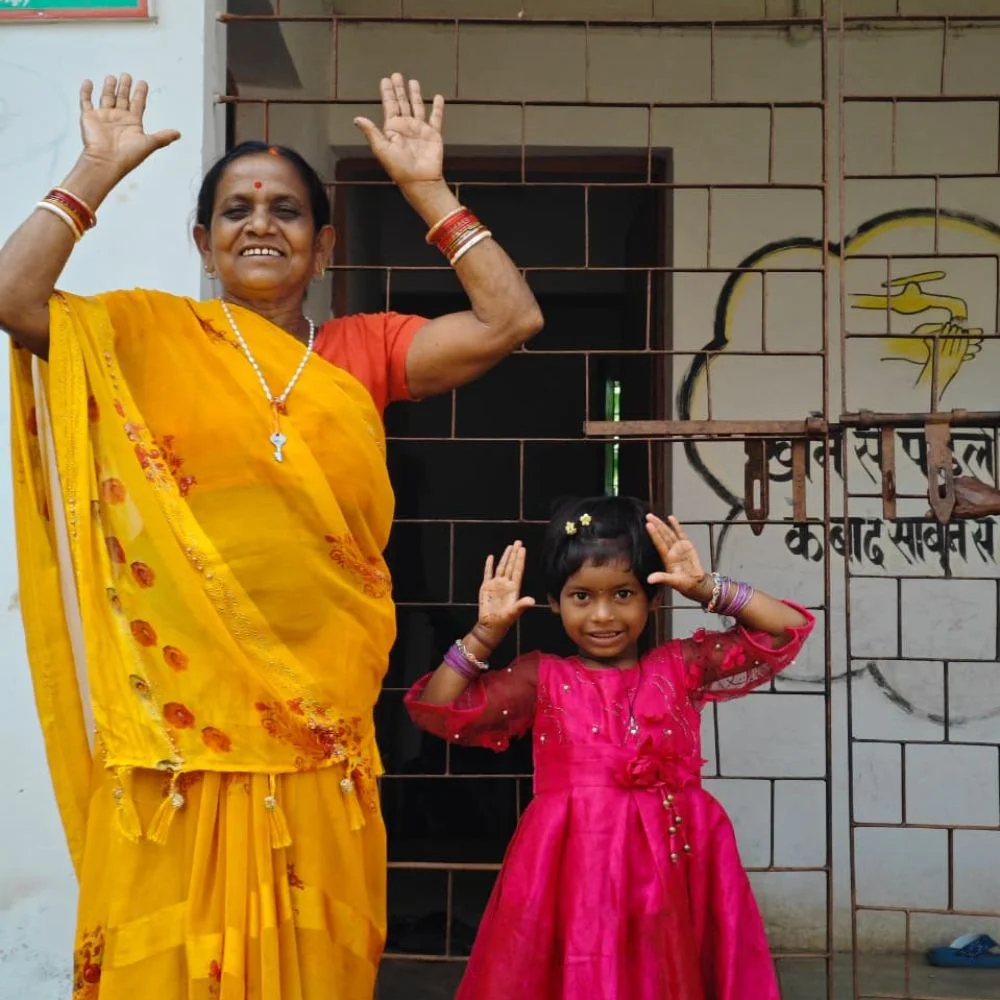
For the children and grandparents of Khinda, the afternoon left something behind that is harder to quantify but no less real: a sense of having been seen, heard, and connected to one another in a way that everyday life rarely makes space for.
The conversations that began in Khinda that day are intended to continue, not as a programme, but as a practice, within families, between neighbours, and across generations.