In the first note, my colleague and I wrote about how the rain in Barchegondi has begun to forget its appointment. This one takes up the next question: how do you plan for a landscape whose rhythms no longer hold?
The answer begins not with data, but with a feeling.
An elderly farmer in Chhattisgarh told one of our field teams, almost in passing: “दस साल पहले… बारिश होने पर मिट्टी से सोंधी सोंधी खुशबु आती थी, अब तो वो भी नहीं है।” Ten years ago, when the rain fell, a fragrant smell would rise from the soil. That fragrance is gone. He was describing loss. The technical word for it is solastalgia (Coined by Glenn Albrecht, it represents “homesickness at home,” combining the loss of solace (comfort) with pain (algia) — the grief of watching your home-landscape change while you still stand in it. Nostalgia mourns a place you have left. Solastalgia mourns a place that has left you.
Climate action in rural India has long treated this feeling as soft data — anecdote, poetry, background colour. I want to argue the opposite. Solastalgia, carefully documented, is one of the most rigorous datasets a warming country like India can build. It captures what no satellite records: the disappearance of a fragrance, the absence of the old cool wind, the silence where a bird’s call used to be — early-warning signals of systemic heat, in the only language long-term landscape memory speaks.
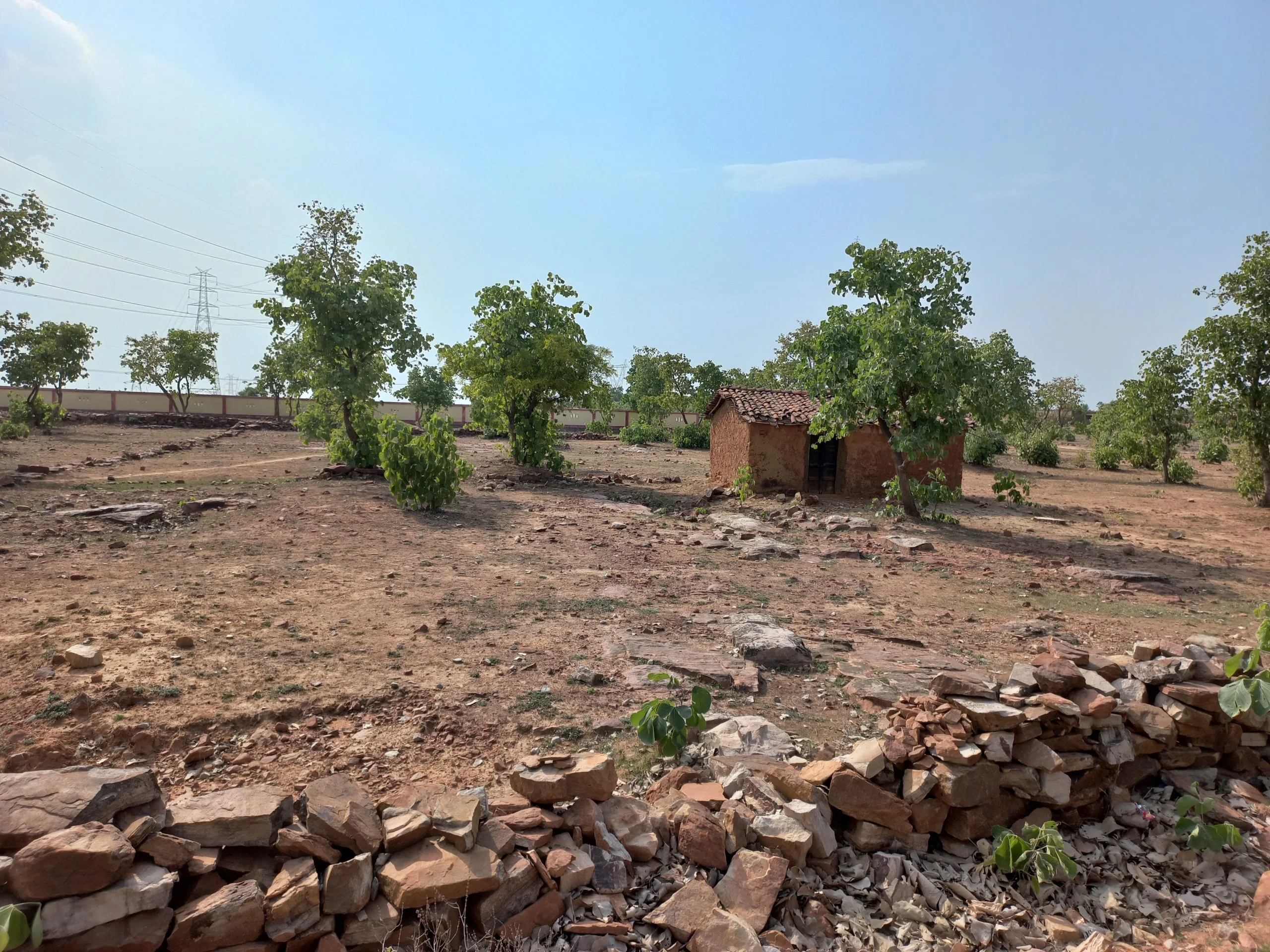
An elderly woman put it plainly: “गाँव में जंगल का नाम निशान नहीं है… भविष्य में हम अपने गाँव को फिर से हरा भरा देखना चाहते हैं।” The forest’s name and trace have vanished; we want to see our village green again. In one breath, she names both the loss and the restoration — a diagnosis and a direction, without the vocabulary a development report would insist on.
Another farmer names a different erosion: “पहले हम आसमान देखकर बता देते थे कि कब बोना है। अब मोबाइल में मौसम देखते हैं, और मोबाइल भी गलत बताता है।” Earlier we looked at the sky and knew when to sow. Now we check the mobile, and even the mobile gets it wrong. This is a quieter grief — the loss of the capacity to read one’s own landscape.
These are the datasets solastalgia builds. Grief, when documented, becomes direction. It tells you what to restore.
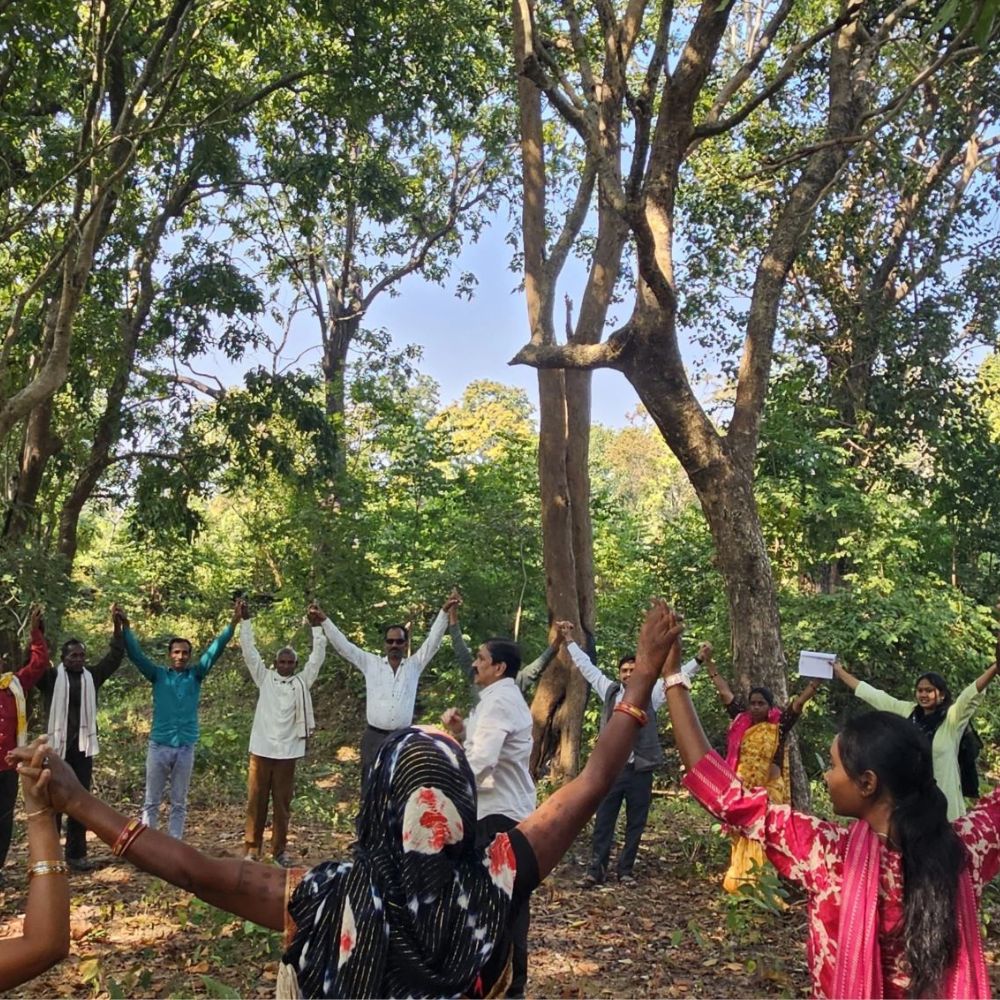
This is the conviction behind Transform Rural India’s Community-led Landscape Assessment (LCA) tool, which we are currently piloting across TRI geographies. The voices in this piece are drawn from those early conversations — landscapes being mapped in real time, grief being logged as data, testimonies now being synthesised into village-level action plans. Adapted from Natural England’s landscape character framework but rerooted in the rural Indian context, the tool treats a village landscape as an integrated system read across eight thematic pillars: landform, hydrology, land cover and agriculture, cultural and historical features, visual and sensory qualities, wildlife and biodiversity, infrastructure and economy, and community and governance.
What makes the tool different is that it does not just inventory; it listens. Communities map decadal change in their own voice — not nostalgia, but testimony.
A man recalls his youth: “आगे गाछ कूट मन खूबे रहे, सुन्दर हवा बहिते रहित… अच्छा बरसात हैबर आए आगे।” Earlier the forests were dense, a beautiful wind kept blowing, no fan was needed, good rain and harvest used to come. A working ecosystem — canopy, wind, rain, yield — remembered whole.
A young woman adds another layer: “रात को छत पर सोते थे, हवा चलती थी, तारे दिखते थे। अब रात भी गरम है। छत तप्ती है, नीचे कमरा तप्ता है। नींद कहाँ से आए?” We used to sleep on the roof — a breeze blew, the stars were visible. Now even the night is hot. The roof burns, the room below burns. Where will sleep come from? The heat has moved indoors — into the body, the unlit room, the hour once reserved for rest.
One voice names what the forest has lost. The other names what the body has lost. Together, they are a climate record. They belong in a plan.
From memory to action
The LCA produces not a report but actionable insights clustered into priority domains — the drying spring to be revived before the monsoon, the grazing corridor to be protected before encroachment, the sacred grove whose canopy quietly cools three neighbouring fields. Each is ranked by the community itself — elders, women, youth and the landless given separate spaces before their voices are braided together, so priorities do not default to the loudest.
From these domains, something else becomes visible: Green Value Chains. The Mahua that drops prematurely is not only an ecological loss; it is a livelihood waiting to be reorganised around climate-resilient processing and market linkage. Millets, lac, honey, NTFPs, agroforestry, indigenous seeds — the commons that systemic heat is drying up are the same chains through which rural prosperity can be rebuilt, if mapped, protected and invested in together. Ecological restoration and livelihood become the same sentence.
This is what lets us do what urban-framed Heat Action Plans cannot: produce a localised, village-level plan that treats heat as a systemic condition, not an event — one that knows which pond to deepen, which canopy to restore, which value chain to strengthen, because it begins with what the village itself has named as lost. It can then converge with VPRP, GPDP, MGNREGA and watershed works, turning public investment from haphazard to climate-resilient action by design.
The first note asked whether the rain could be helped to remember its appointment. This is its procedural cousin: can we help a village document what it has lost, before we ask it what to build?
This is the plan we are trying to build. Because one that does not grieve the sondhi-sondhi khushbu will never know to bring it back.
This is the second article in a three-part series on systemic heat in rural India. In the concluding article, When the Forest Falls Silent, we examine how systemic heat creates cascading vulnerabilities that fall disproportionately on women, quietly reshaping livelihoods, care work, and the social fabric of rural communities.