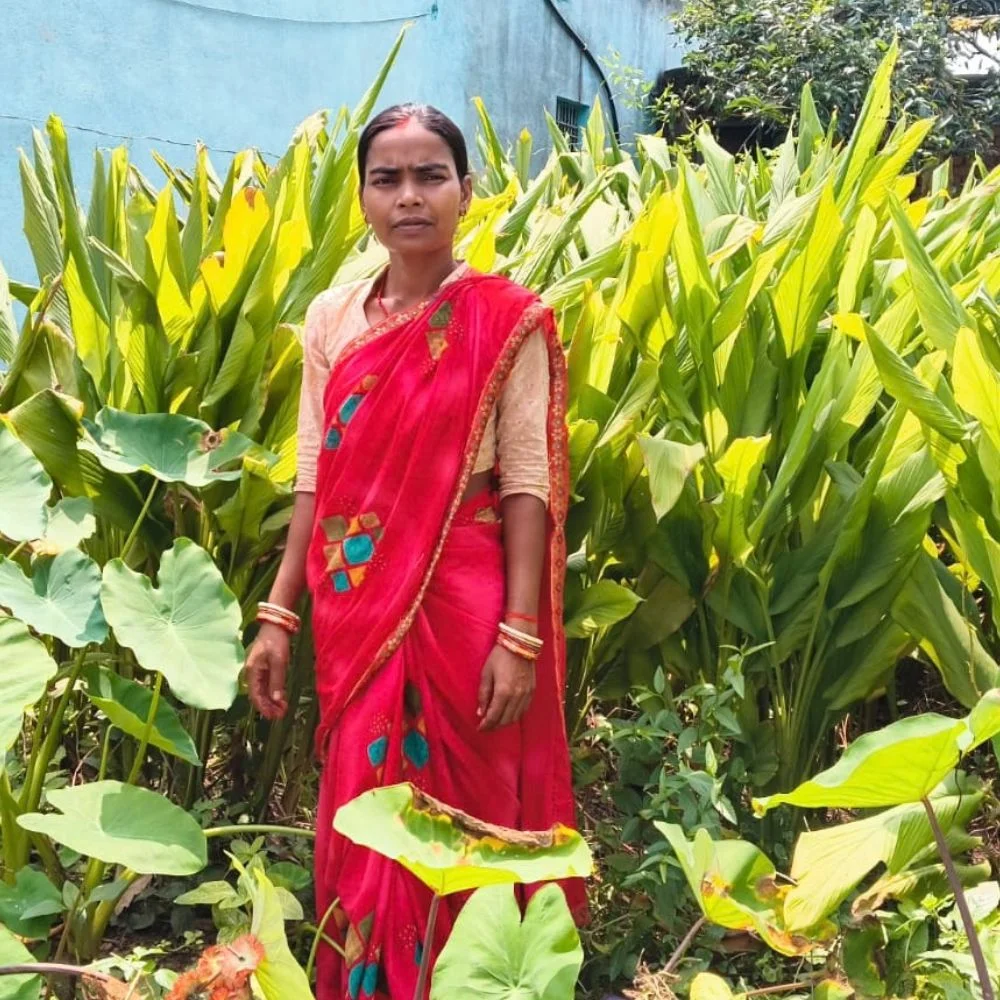
In the previous note, my colleague beautifully showed how, when carefully documented through community voices, solastalgia can become one of the most rigorous datasets a warming country like India can build. That reflection brings me back to Raveti Didi from Vankhad village in Sondwa block of Alirajpur district, Madhya Pradesh — whose memories and reflections offer a glimpse into what the same landscape looks like when you go for fetching water or collecting firewood.
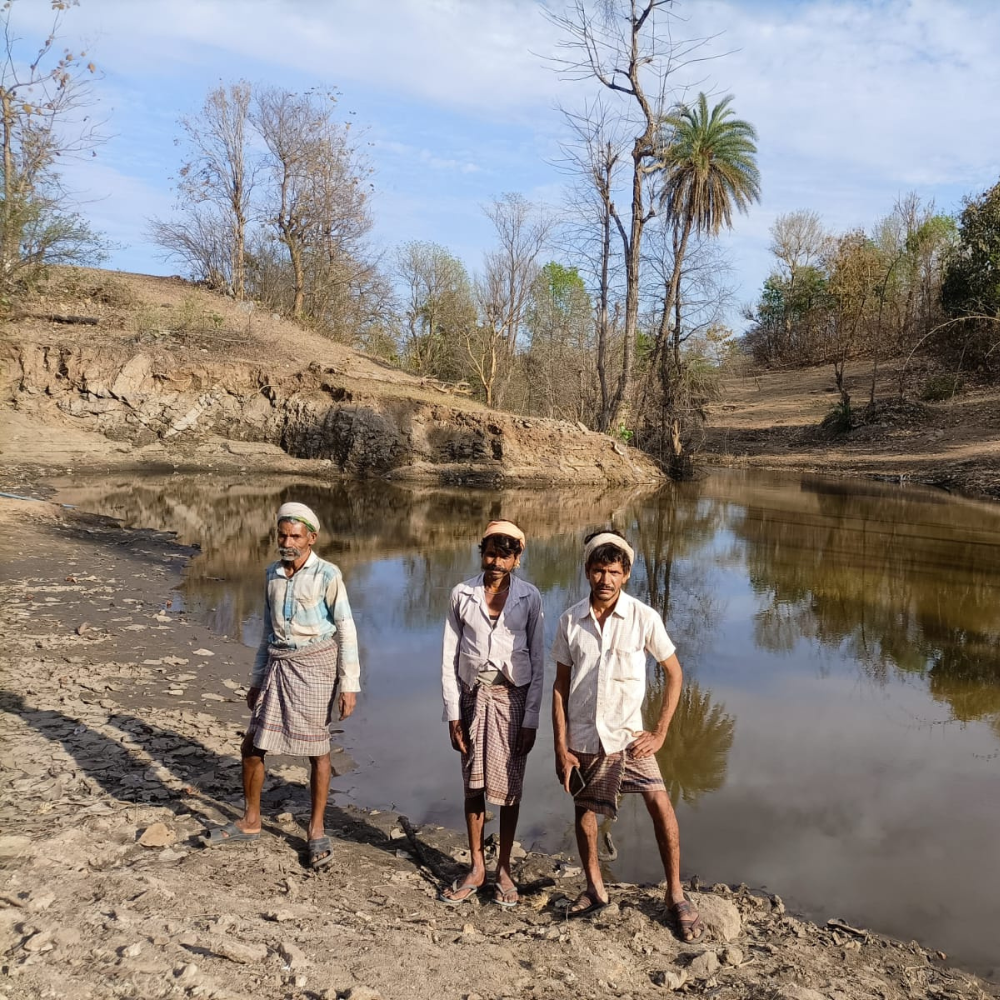
At around forty today, Raveti Didi still remembers when the spring survived even the harsher summers of her childhood. When we asked her how the landscape had changed, she spoke of an old seep she once visited as a child — a thin, shaded spring that endured through difficult summers but had grown increasingly unreliable in recent years.
She explained, in the matter-of-fact register of someone who has long been responsible for fetching water:
“अब तो झरना भी जल्दी सुख जाता है, और पानी कम बचता है।”
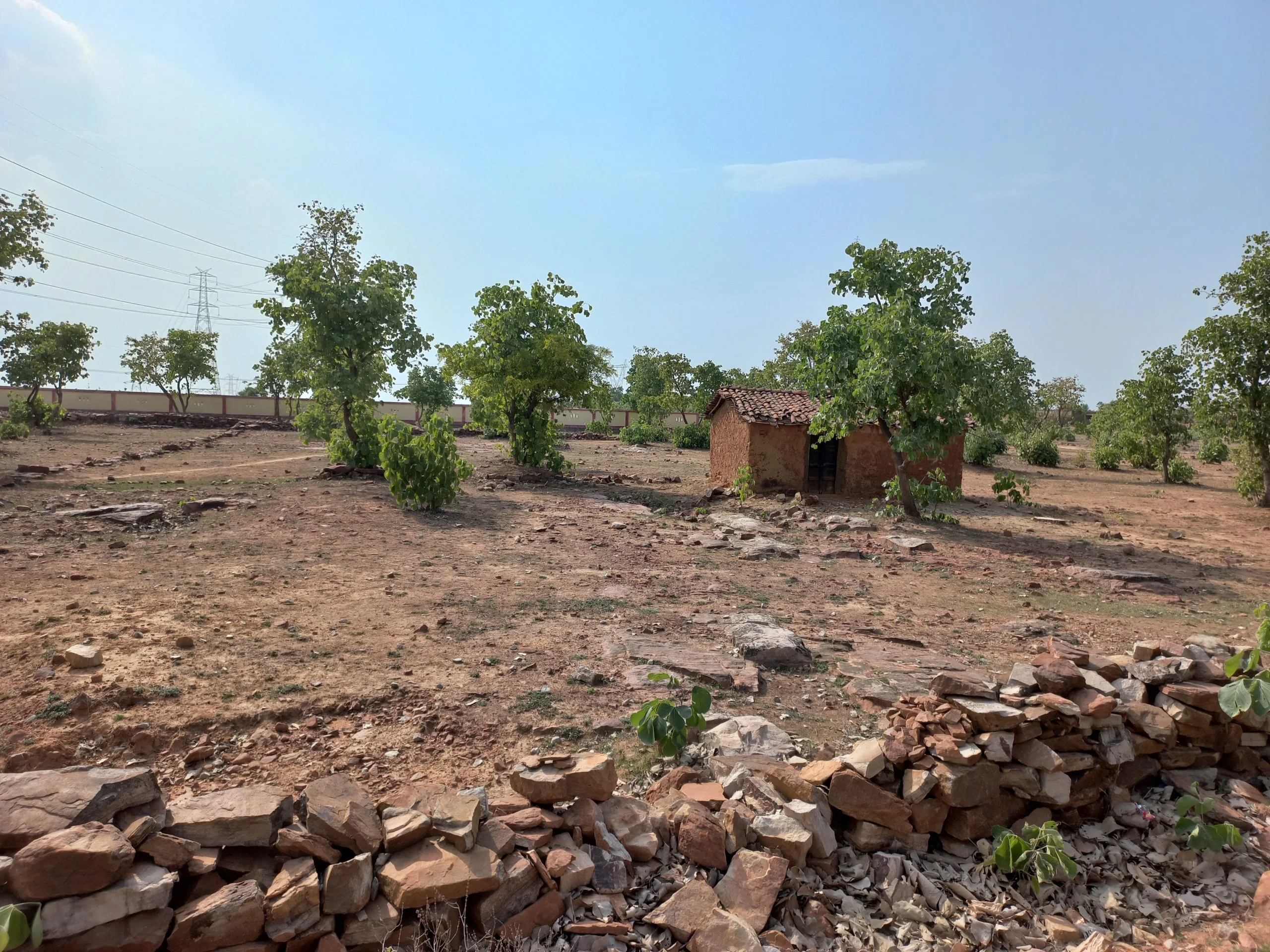
First, the flow reduced. Then the moss on the stones disappeared. Then the spring itself vanished. Finally, the walk itself changed. What was once a cool path through Bel, Baheda, and Tendua became an exposed stretch of loose soil and heat. The walk, here, is the women’s walk: the daily journey to water that almost no household survey codes as labour.
“पहले पानी लाने में थकान नहीं लगती थी,” she said quietly. “अब दूर जाना होता है बहुत, और रास्ता भी गर्म लगता है।”
The exhaustion she names is not generic. It is the cumulative tax that systemic heat is levying, almost invisibly, on women’s bodies.
Formal climate reports would describe this as reduced groundwater recharge, extended dry spells, and ecosystem degradation. But what Raveti Didi and the women of her village experienced was something larger: the quiet rearranging of village life itself.
The drying spring led to longer walks for women. The exhaustion was theirs. The kitchen gardens that shrank were theirs to tend. The Mahua income that was reduced was theirs to lose. The wild greens and tubers becoming harder to find were theirs to gather from increasingly distant forest patches.
As nearby forests thinned, another shift quietly unfolded inside the household. Men who once returned carrying Mahua, tendu, and firewood together now travelled farther for saleable forest produce, while firewood collection increasingly shifted onto women’s labour. What disappeared from the forest reappeared inside the household as additional distance, time, and exhaustion for women.
This is a cascading vulnerability. Systemic heat rarely arrives as a spectacular event. It works slowly, eroding the invisible scaffolding of rural worlds — often through the invisible labour of women.
Pollinators disappear. Flowering cycles grow irregular. Forests that once sustained everyday life begin yielding less, demanding longer walks and greater labour for smaller returns. Local nutrition declines quietly as wild foods disappear and kitchen gardens shrink. Weekly markets thin as both local produce and purchasing power weaken.
And when these changes persist long enough, they begin eroding dignity and continuity as well. While many men migrate seasonally, women remain behind, holding together thinning households and village economies under intensifying heat. The household survives because women absorb the cost of ecological loss through their own bodies and time.
In the villages we have been walking through across the Vindhyan forests and plateaus, people rarely describe these transformations through the language of climate science. Raveti Didi told us instead:
“अब तो हवा भी हवा जैसी नहीं लगती।”
Even the wind no longer feels like the wind.
An elder woman in one of the villages near Chhaktala told us simply that,
“जंगल चुप सा हो गया है।”
The forest has gone silent.
These are not fragments of nostalgia. They are observations of ecological disruption accumulated through long intimacy with place. And the intimacy is often women’s intimacy — built through daily walks for water, food, fodder, fuel and firewood.
This strain is visible across the samaj-sarkar-bazaar relationship. In the samaj, ecological stress reshapes women’s mobility, emotional well-being, and community rhythms. In the bazaar, shrinking commons and unreliable forest produce gradually hollow out local economies, while local nutrition once sustained by forests and kitchen gardens is replaced by purchased calories and distant dependency. And the sarkar, despite growing recognition of heat stress, still responds with fragmented and seasonal Heat Action Plans written for the visible male labour on construction sites and city streets, rarely seeing the chulha at 47°C, the predawn handpump, or the maternal heat stress accumulating quietly in district health systems.
But rural India is increasingly confronting something slower, deeper, and more interconnected than seasonal thermal events.
Systemic heat unfolds across all 365 days of the year. A drying spring today becomes a longer walk tomorrow, an exhausted woman the year after, and eventually the slow erosion of community continuity itself.
Responsive plans alone are not enough. What is needed is deeply rooted governance that recognises cascading vulnerabilities where they first emerge-at the chulha, the handpump, and the predawn walk to water. Organisations like Transform Rural India can play an important role here by helping communities document Non-Economic Loss and Damage in their own voices — especially the voices of women, whose daily labour may be the most accurate barometer of systemic heat that rural climate interventions can hope to read.
A temperature chart will tell you when the heat arrived. It will not tell you when the fragrance left. For that, you would have to ask the woman who used to recognise it — and who has been quietly mourning its absence for longer than any climate model has been calibrated to notice.