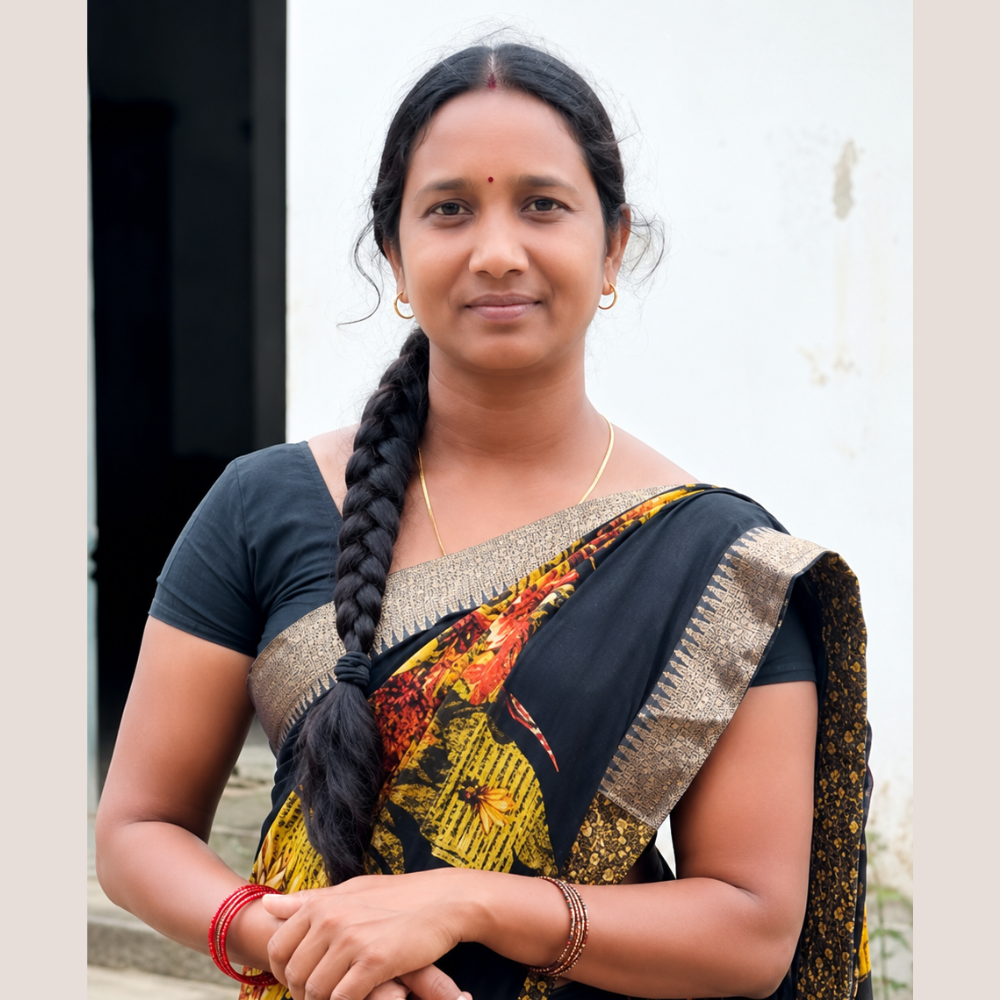
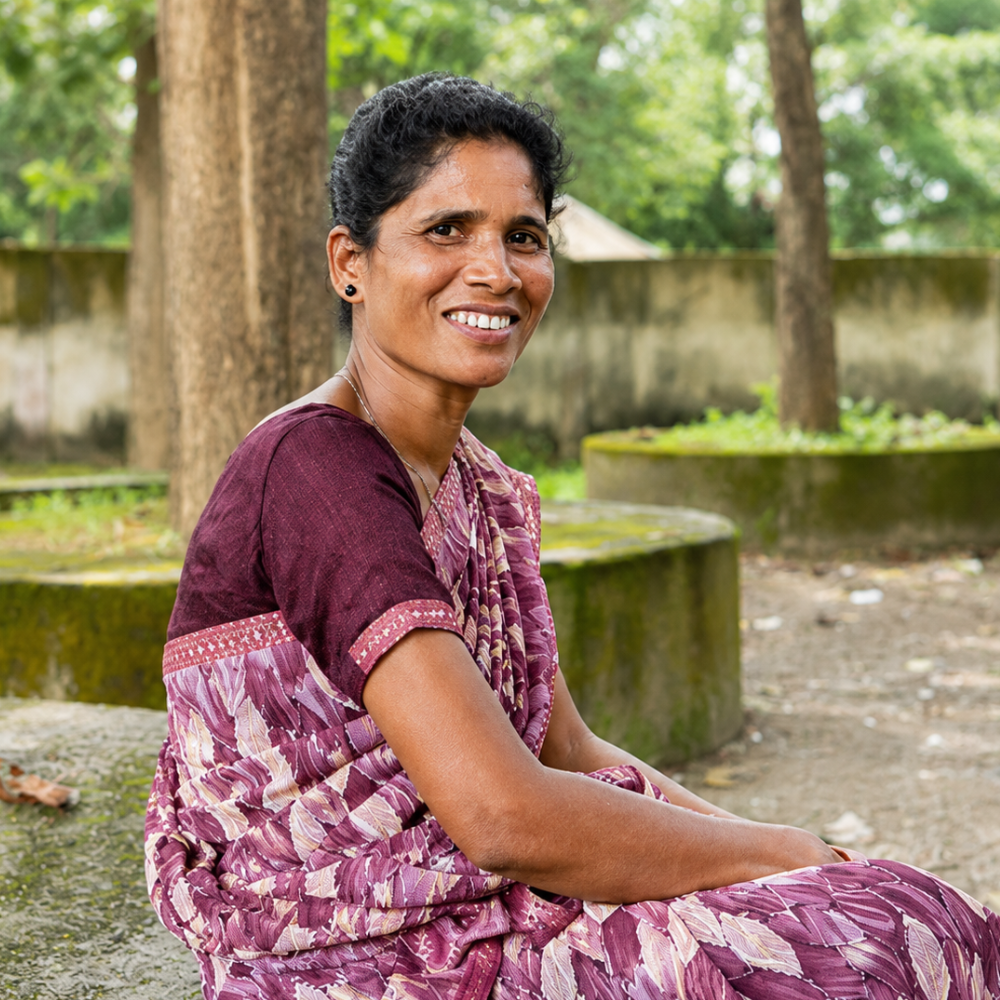
For years, the monsoon decided how much Parlebai Makaram Rawat’s family could earn.
Her less-than-one-hectare farm in Semaliya Khodra, a village in Pati block of Madhya Pradesh’s Barwani district, is entirely rainfed. For a family of six, traditional farming on the small plot was not enough to make ends meet. Every year, her husband would migrate to Gujarat for wage labour and return when the farming season began.
For Parlebai, the challenge was not only that she had little land. It was that the land itself was becoming harder to farm. Erratic rainfall, water scarcity and declining soil fertility were making an already fragile livelihood more vulnerable.
Then she began to ask a different question: could the same piece of land support her family if she farmed it differently?
A year later, the answer was beginning to emerge. In financial year 2025–26, the farm generated nearly ₹1.5 lakh in agricultural income. Her husband no longer migrated to Gujarat. The family now works together on their own land.
When the climate question reached the farm
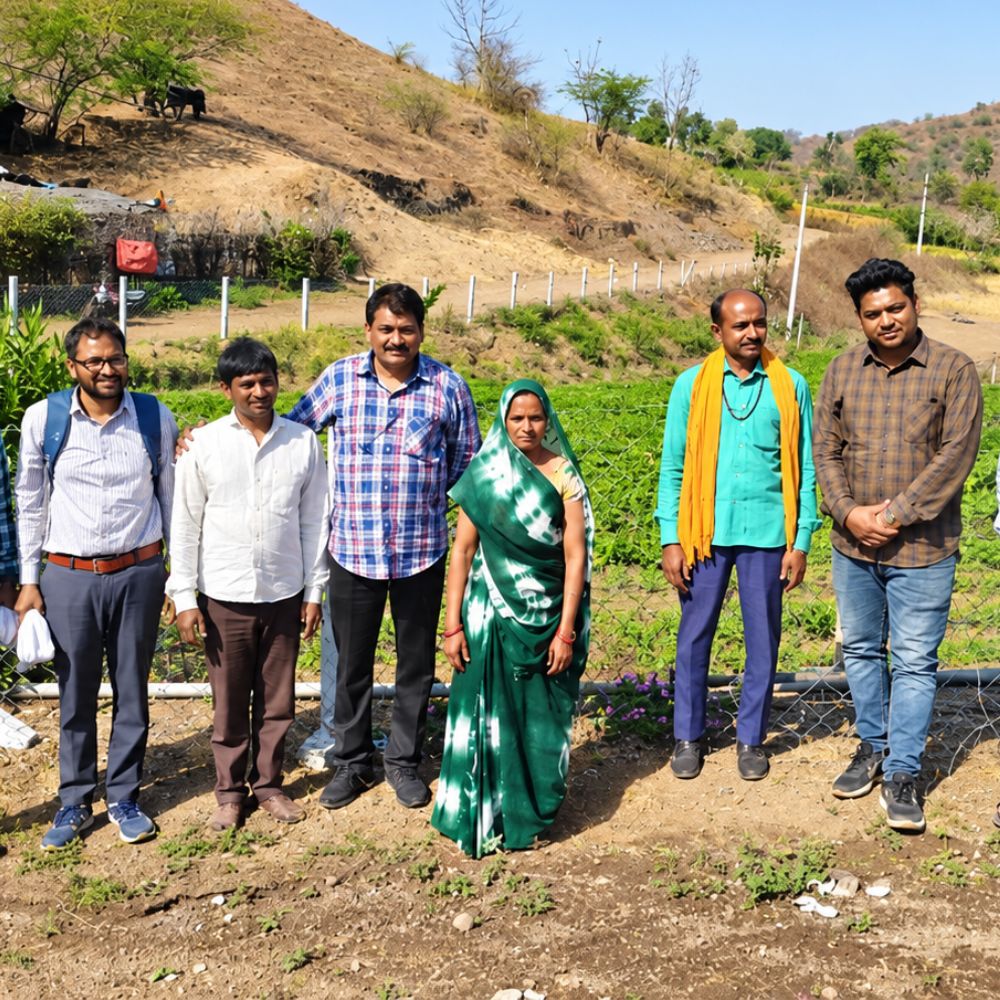
The shift began with a Participatory Rural Appraisal (PRA) in the village. MGNREGA officials and frontline workers, with support from development designers from Transform Rural India (TRI) and Samarth In Participatory Action (SIPA), worked with villagers to understand local challenges and possibilities.
The discussions brought together issues that are often treated separately: changing rainfall, declining soil fertility, water conservation and sustainable livelihoods.
For Parlebai, the conversation showed that climate resilience did not have to mean abandoning a vulnerable farm. It could mean changing what happened on it.
She began working under Ek Bagiya Maa Ke Nam, a Government of Madhya Pradesh scheme that promotes women’s ownership of productive agricultural assets through orchard development. The approach combines fruit trees with diversified cropping, natural farming, water management and micro-irrigation, helping small farmers spread risk while building a longer-term asset.
TRI and SIPA, alongside the MGNREGA block team, supported Parlebai through practical training in Geographic Information System (GIS)-based orchard planning, scientific horticulture, multi-cropping, water management and micro-irrigation. She also learnt to prepare natural farming inputs such as Jeevamrit and Neemastra.
One farm, eight crops and 100 trees
In June 2025, Parlebai planted 100 jackfruit saplings.
The trees are a long-term investment. Jackfruit can withstand relatively limited irrigation, while fruit trees can help conserve soil moisture, reduce erosion and heat stress and build a longer-term source of income.
But Parlebai did not wait for the orchard to mature.
Between the young trees, she began cultivating eight crops: chilli, cluster beans, radish, coriander, fenugreek, brinjal, carrot and cucumber. Diversifying the farm meant that a pest outbreak, dry spell or weak market for one crop would not wipe out the entire season. Staggered harvesting also meant income could come in regularly rather than all at once.
The first major test came with chilli.
The first harvest changed the equation
During Kharif 2025, MGNREGA, with support from SIPA, provided Parlebai with chilli saplings free of cost. She cultivated the crop using Jeevamrit and compost.
She spent ₹25,000 and earned ₹1.18 lakh, leaving an income of ₹93,000.
The Rabi season brought another boost. Parlebai spent ₹14,000 on vegetables and earned more than ₹70,000, generating an income of over ₹56,000. Because the crops matured at different times, she was able to sell them weekly in local markets.
Together, the two seasons helped take her agricultural income in financial year 2025–26 to nearly ₹1.5 lakh.
Why the name on the orchard matters
There is another change that cannot be measured only in crop yields.
The orchard was registered in Parlebai’s name under Ek Bagiya Maa Ke Nam. As the woman beneficiary, she received wage payments, seedling payments and the maintenance fund directly into her bank account. She also received barbed-wire fencing for the farm.
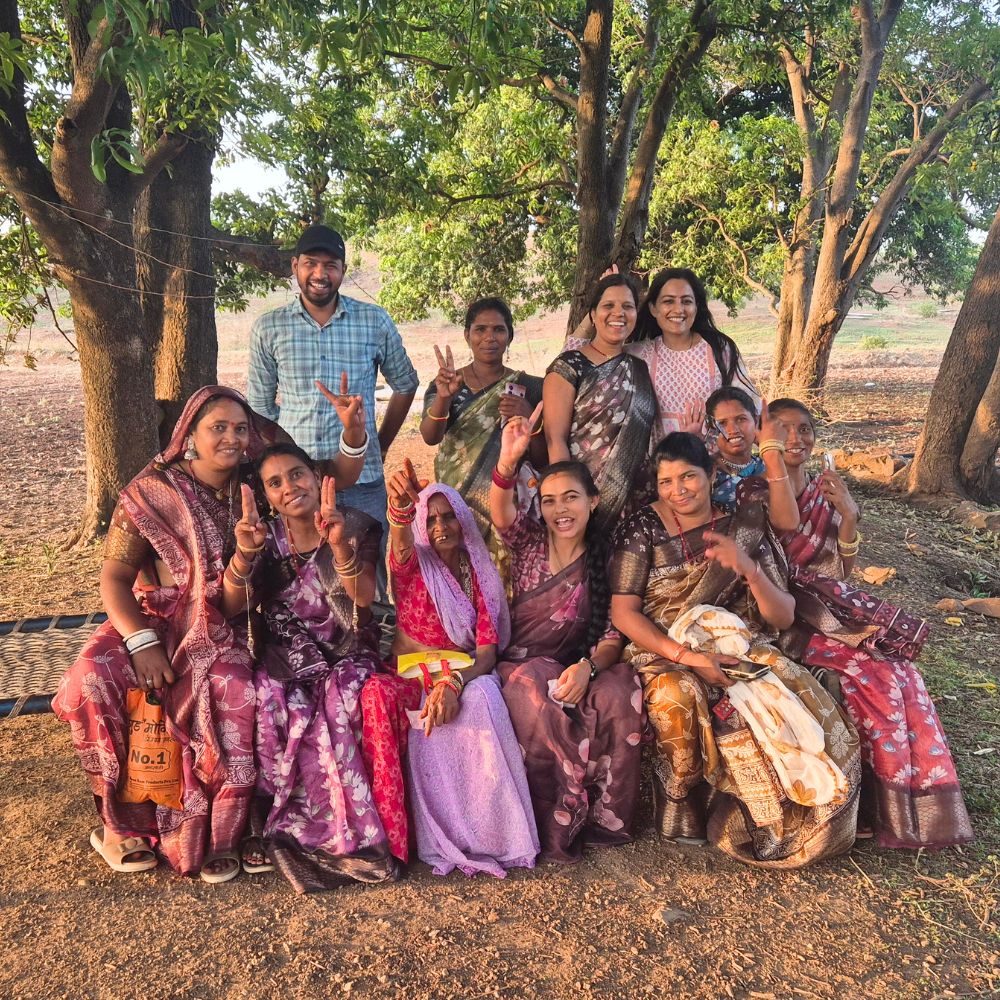
The family’s seasonal migration has stopped. Parlebai and her husband now work together on their own farm, while women from neighbouring villages visit her plot to learn from her experience.
The significance of the farm lies in how its different pieces now work together. Diversified crops reduce dependence on a single harvest. Natural farming practices are aimed at improving soil health and water-holding capacity. Micro-irrigation helps make limited water go further. The jackfruit orchard is building a longer-term asset.
Together, these are small but practical forms of climate adaptation for a farmer whose livelihood depends on less than a hectare of rainfed land.
From one farm to a wider possibility
Parlebai’s farm is one example of what the Ek Bagiya Maa Ke Nam approach can make possible when a government scheme, local institutions and ground-level support come together.
The model is now reported across all 313 blocks of Madhya Pradesh, reaching around 32,000 farmers across 30,000 acres.
For Parlebai, however, the change remains rooted in one small farm in Semaliya Khodra.
The orchard will take years to mature. The monsoon will remain uncertain. Markets will continue to fluctuate. But her farm is no longer organised around simply surviving one season at a time.
“If the right technology, timely support, and scientific farming practices are provided, even a small piece of land can make an entire family self-reliant,” shares Parlebai
And that may be the most important change of all: Parlebai did not get more land. She found a way to make the land she had more resilient, productive and hers.