When a woman in rural India decides she wants to start a business, the idea is rarely what holds her back. What stops her is the money she needs to begin, because she usually has no land in her name, no salary slip and no savings of her own to show a bank. The moneylender is often the only option left, and his interest rates can turn even a modest plan into a debt that lasts for years. For most women, a shop of their own remains something to imagine rather than something to build.
Shivani understood this well when she joined the Radhakrishna Self-Help Group (SHG) in Bajauta Gram Panchayat in 2018, along with 11 other women. The group was part of the Bhavana Village Organisation, and like many of its members, Shivani hoped it would give her a small amount of financial help to support her family’s livelihood and give her children a better future.
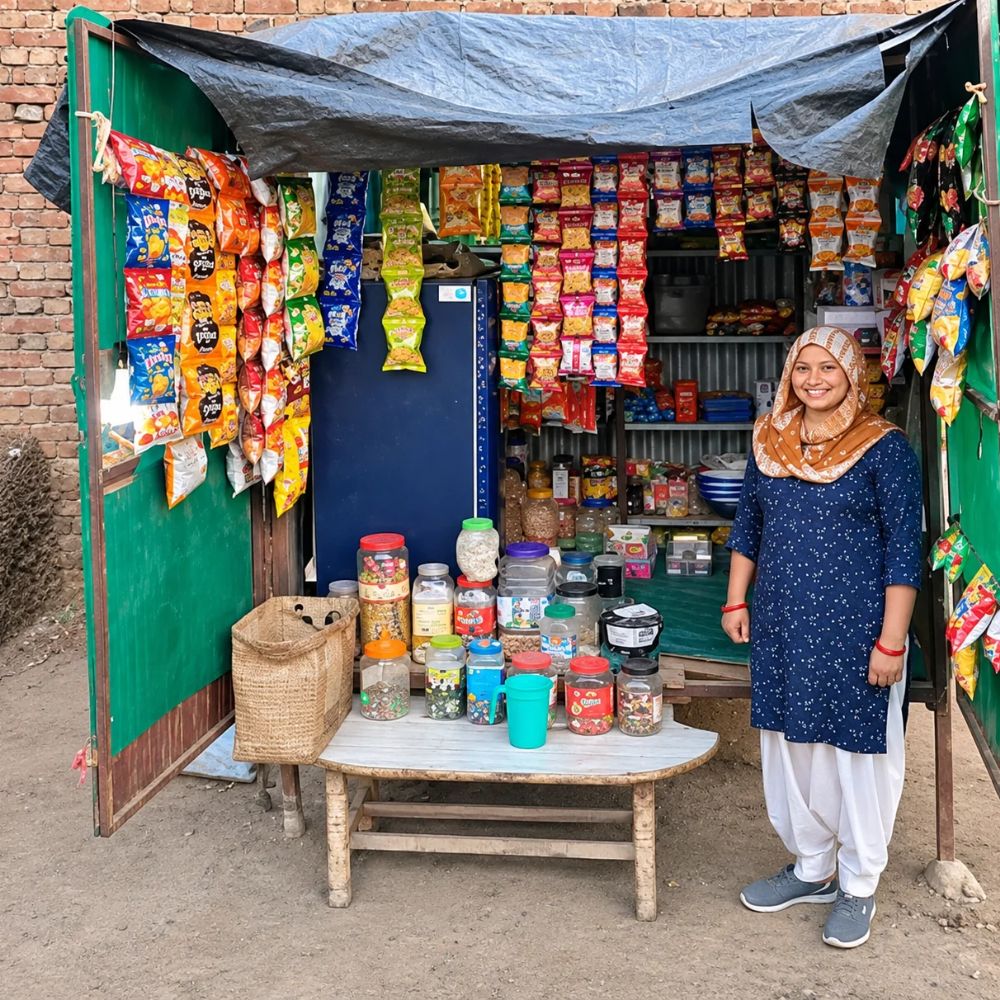
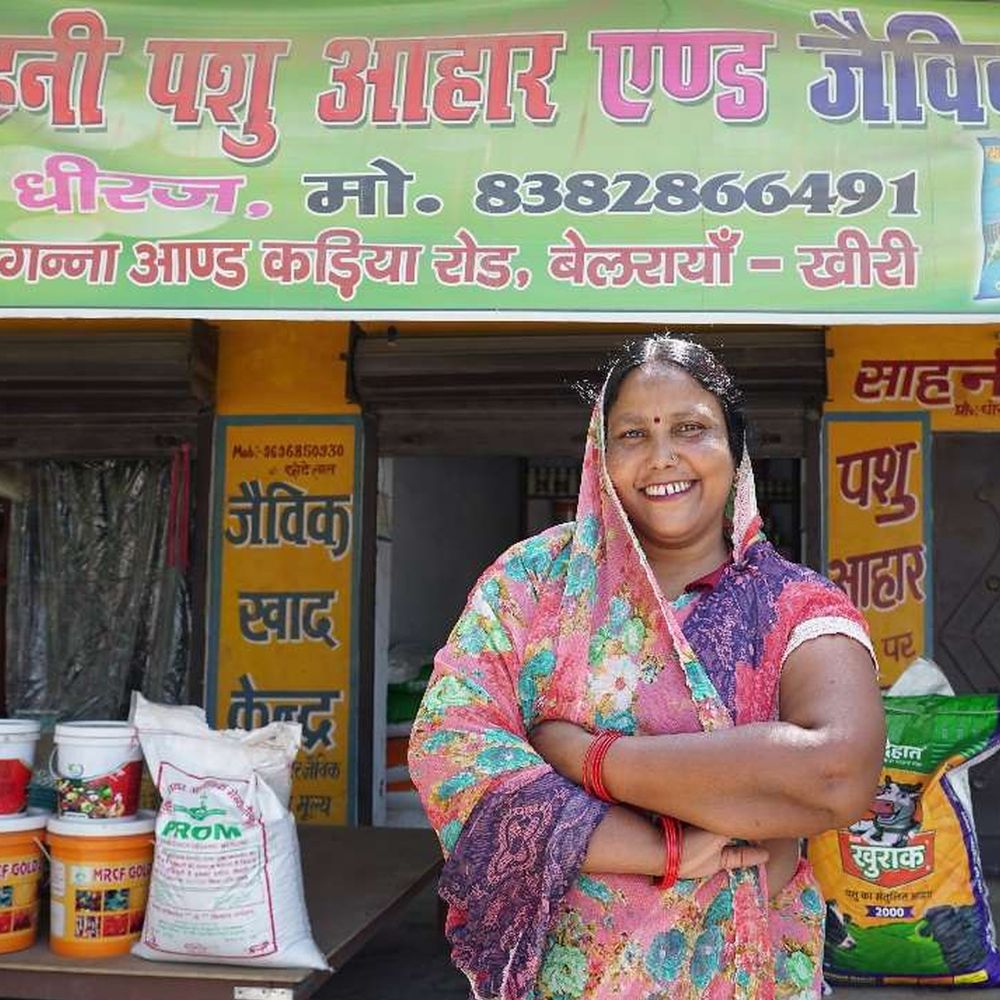
With guidance from the group and a great deal of determination, she raised a loan of ₹50,000 through the SHG’s Micro Credit Plan (MCP) and opened a small kirana, or grocery, shop from her home. Transform Rural India (TRI) supported her as the business took shape, building her capacity through training, linking her to markets and sharing information on how to run and grow an enterprise.
Since her resources were limited, Shivani chose not to stock everything at once and started with cold drinks, a product that was always in demand in her village. It gave her a manageable start with good profit margins while she learned how the business worked.
As sales picked up, she used her earnings to repay the loan and then invested in a buffalo, which gave the household a second source of income. With money coming in from both the shop and the buffalo, she was able to pay her children’s school fees and bring more stability to the family.
Over the next few years, she kept adding new products to her shelves. Nearly six years after she joined the SHG, the counter that once sold only cold drinks has grown into a full kirana store that meets most of her neighbours’ daily needs. Shivani is now financially independent, manages her family’s finances and supports her husband in providing for the household.
Her success has also brought her a new role in the community. She now serves as the Ajeevika Sakhi of her SHG, supporting other women in the group as they work to build their own livelihoods.
Shivani’s story shows what becomes possible when an SHG provides the trust and credit, TRI provides the skills and market connections, and a woman brings the judgment to start small and the discipline to reinvest what she earns. Millions of rural women across India are already members of SHGs, and with the right support, many more of them can turn a small loan into a lasting business.
Having seen how far her shop has come, Shivani now wants to scale up her business and build a better life for herself and her family.