In a rural household that depends on one earner, a single accident can undo years of stability. Wages stop overnight while medical bills keep arriving and the woman of the house, who often has no income of her own, is left to find a way through. Too often that way leads to a moneylender’s door and the family spends years paying for a few difficult months.
Preetu Choudhary faced exactly this moment in 2019, but by then she had already found a different door to knock on. A resident of Bajauta village, she had been a member of the Seeta Raam Self-Help Group (SHG), part of the Bhavna Village Organisation (VO) under the Jeevan Jyoti Cluster Level Federation (CLF). In 2018 the group was barely functioning, until Preetu’s mother-in-law, who was secretary of the Prerna CLF in the Malav cluster, began sharing stories of what SHG women elsewhere were achieving. Inspired by those accounts, Preetu set out to revive her own group and encouraged its members to follow the panchasutras, the five principles of a healthy SHG: meeting regularly, saving regularly, lending within the group, repaying on time and keeping accounts up to date.
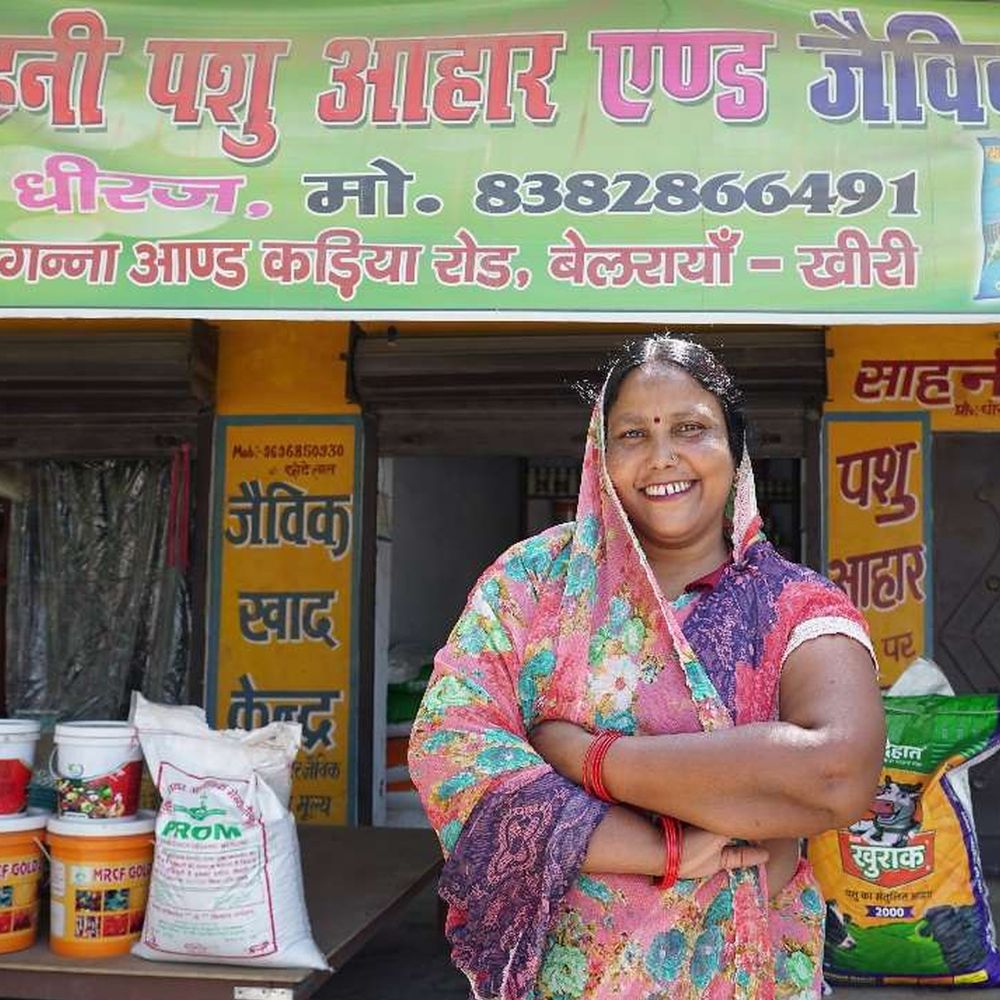
That groundwork mattered when her husband suffered a severe leg fracture that kept him in bed for months. With no steady income and expenses mounting, Preetu applied to her VO for ₹50,000 through the Micro Credit Plan (MCP) and was sanctioned ₹32,000, which she used to renovate her shop and restart her business. Transform Rural India (TRI) supported her as she rebuilt, building her capacity through training, linking her to markets and sharing information on running and growing an enterprise.
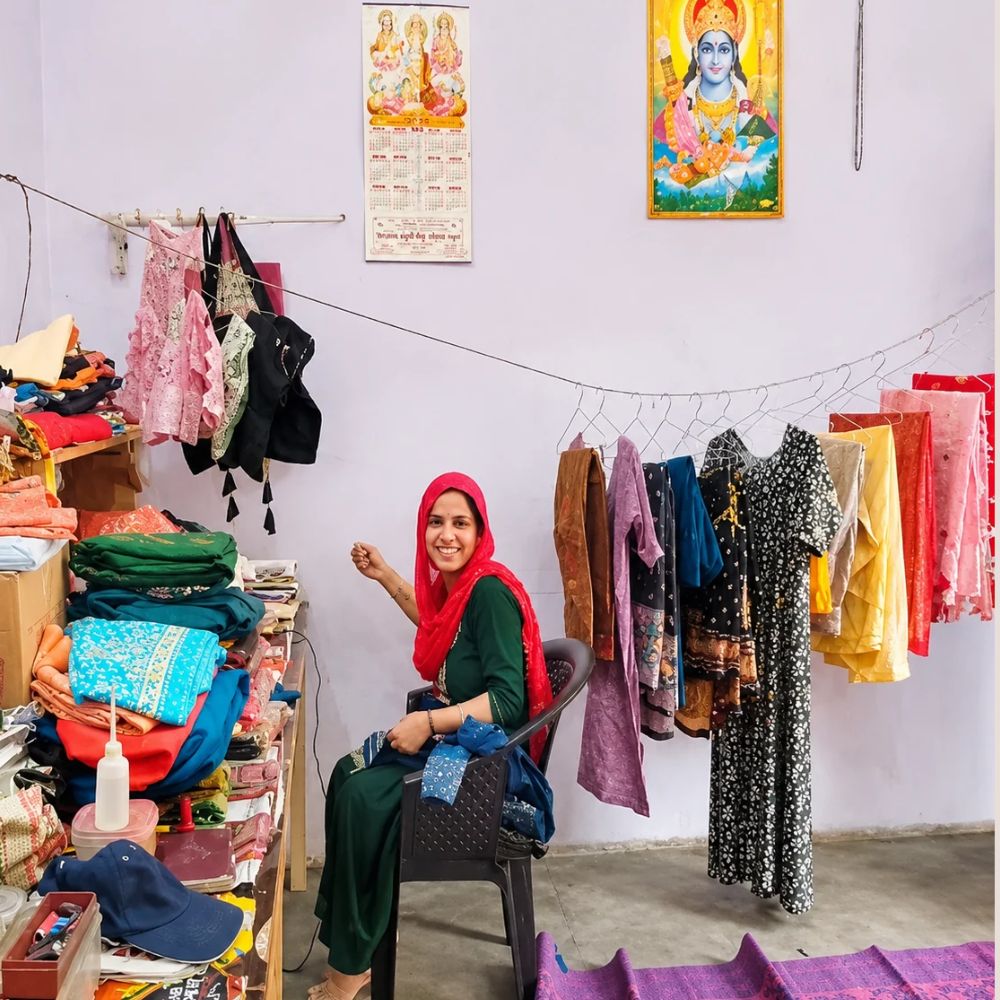
Two years later, she raised ₹80,000 from a bank through cash credit linkage and set about expanding. She spent ₹9,500 on a sewing machine and began stitching clothes, but the village already had stiff competition among tailors. Preetu decided to charge 30 to 40 per cent less than the others and the lower prices helped her win customers.
Her earnings were enough for her to repay her loan entirely on her own, without taking a single rupee from her husband. As the work grew, she expanded to three sewing machines and now employs three other women. She has also taught stitching to other SHG members in the village so that they too can earn from the skill. She is proud of how she got here.
“Maine kisi ke saamne haath nahi failaye,” she says. (I never had to hold out my hand to anyone.)
Preetu’s journey shows how an SHG that works well can carry a family through a crisis and how the right support can turn that recovery into an enterprise that creates jobs for other women. Every woman she trains or employs extends that same opportunity a little further across her village.
Her ambitions have only grown since then. She once enrolled in an apparel design course at the Rural Self Employment Training Institute (RSETI) in Aligarh but had to leave it unfinished while her children were small. She now plans to go back and complete it, with the aim of becoming the first fashion designer from her panchayat.