Every season, Sangeeta Pandey went back to the local dealer and paid for seed she could not trust. Every harvest, she handed her crop to a middleman at whatever price he named. On 2.48 acres of dry land in Bundelkhand, the sums rarely added up. Her farm brought in about ₹50,000 a year, and much of what she spent on it never came back.
Sangeeta, 38, lives in Pauhar village in Naraini block of Uttar Pradesh’s Banda district, where drought is a frequent visitor and irrigation is scarce. Like many women in the region, she fitted her fields around housework and farmed largely by trial and error. Uncertified seed, rising input costs and soil that held little moisture kept her yields low. She was a member of the Bhairam Baba Self Help Group (SHG) under the National Rural Livelihood Mission (NRLM), yet on her own land farming felt like a struggle to get by rather than a livelihood.
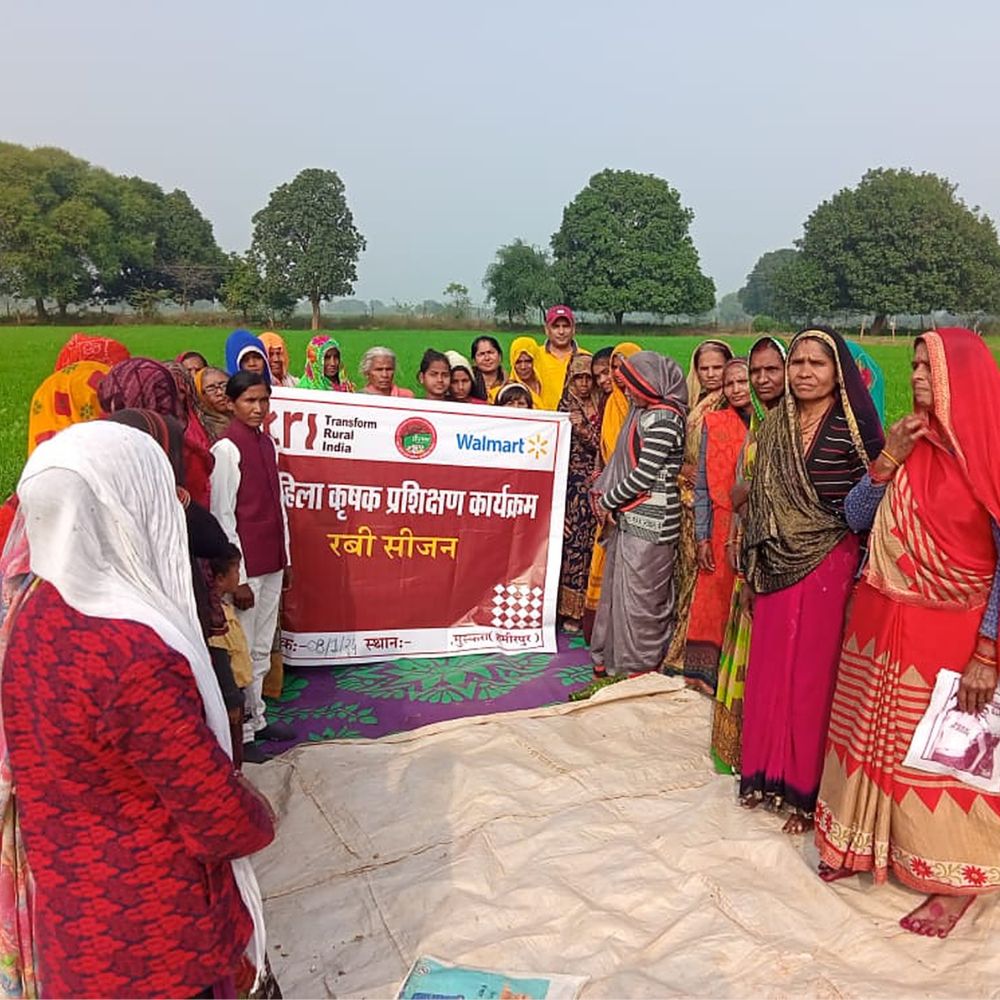
That began to change in 2023, when she was connected with her village’s women-led farmer producer organisation, Bundeli Mahila Producer Company Limited, through the Beej to Bazaar initiative supported by Transform Rural India (TRI). As the name suggests, the initiative works across the whole life of a crop, from the seed a farmer sows to the market where she sells.
The starting point was Package of Practice training that took Sangeeta through the full farming cycle in both the Kharif and Rabi seasons: land preparation, seed selection, cultivation, post-harvest handling and getting ready for market. The programme also linked her to the Agriculture and Horticulture departments and to the Krishi Vigyan Kendra (KVK) for seed support and training in better practice.
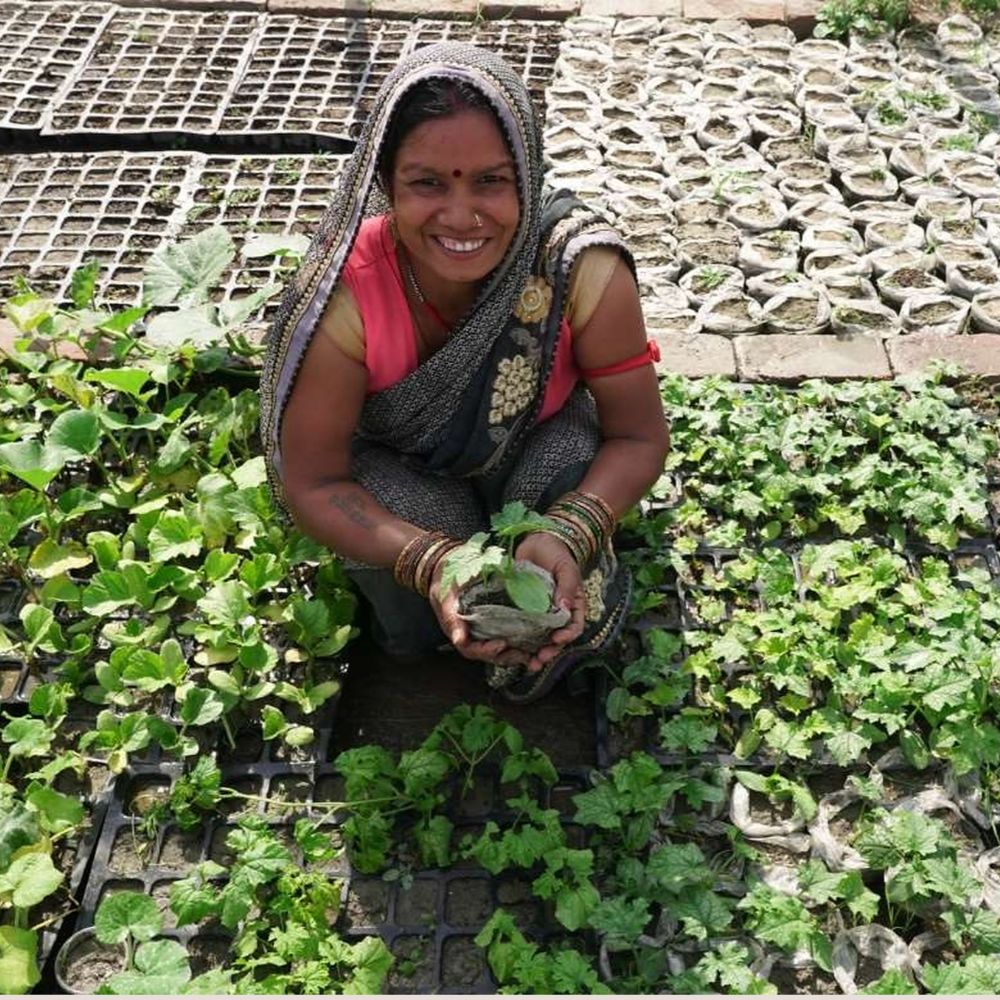
Seed came first. A training run by the producer company focused on reviving climate-resilient local crops suited to Bundelkhand’s dry conditions. Sangeeta learned to save seed from her own harvest and to refresh it every year so it would not weaken through inbreeding. She learned the traditional method of storing seed in clay pots with neem leaves to keep pests away, and how to trade seed with other farmers through a community seed bank. Today she exchanges seed with 25 other women farmers and keeps a seasonal reserve of her own.
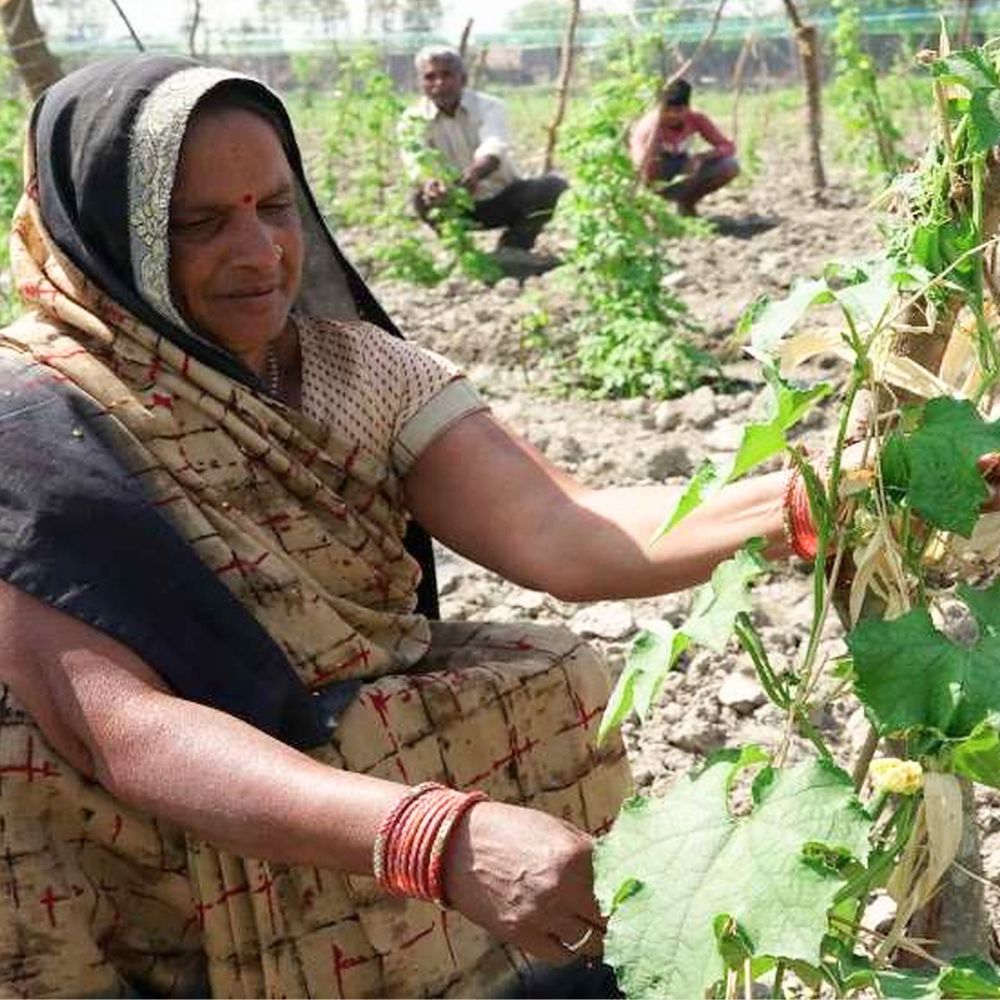
Then came the soil. With guidance from KVK experts and SHG-level training, she switched to compost and farmyard manure and grew dhaincha as green manure to return nitrogen to the land. She chose drought-resistant, short-duration varieties that need less water and began growing arhar, sesame and mustard together. Mixing crops spreads her risk when the weather turns and improves the structure of the soil. Within two years the land was visibly recovering. Earthworms returned, the soil held moisture better and her crops grew healthier with fewer chemical inputs.
Finally, the market. Selling had always meant going through middlemen who offered low prices and left her with little profit. Through the producer company, Sangeeta now sells collectively with 150 women farmers, giving them a bargaining power no single farmer has. She sells directly at the mandi and at local fairs, and is part of WhatsApp groups where the women share real-time prices, news of demand and lessons from their own fields.
The results show in her accounts. In two years, Sangeeta’s annual farm income has risen from ₹50,000 to ₹85,000, an increase of 70 per cent. Her cost of production has come down from ₹12,000 to ₹10,000 an acre, a drop of 16 per cent, and her spending on seed has fallen by 80 per cent. Half the seed she sows now comes from her own reserve, where earlier none of it did. And because she now sells direct, through retail and at fairs instead of through middlemen, more of every sale stays with her.
The change reaches well beyond her field. She is known locally as a Mahila Kisan, a woman farmer. She was elected Secretary of the SHG Federation and takes part in Gram Sabha discussions and community decisions. Recognising the ground she had covered, the producer company selected her as a Sanchalika Didi. She has been trained to run primary processing units and linked with institutional buyers through the company’s mandi licence.
Her work is already spreading. Sangeeta leads seed-saving and organic farming efforts in three villages and supports farmers nearby. Every part of the model, from the seed bank to collective selling, runs through institutions that women in the area already belong to: SHGs, their federation and a women-owned producer company. As those institutions grow, so can the reach of what Sangeeta has learned.
For her, this is only the beginning. Having seen what her land can do, Sangeeta now wants to scale up her farming and use what it earns to build a better life for herself and her family. Two years ago, that would have sounded like wishful thinking. Today it is a plan.
For Sangeeta, the difference fits in a single line. “Pehle kheti majboori thi, ab rozgaar ban gayi hai.” (Earlier, farming was a compulsion. Now it has become my livelihood.)