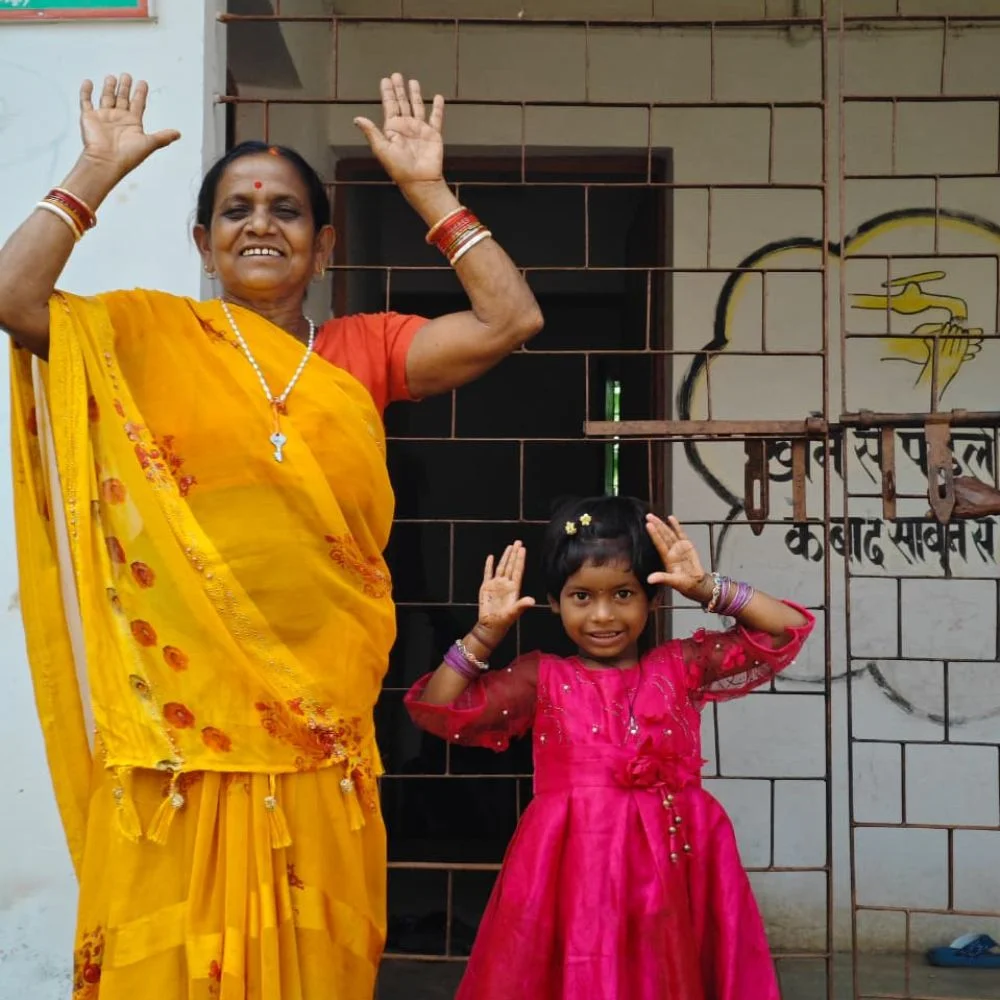
“Barsat mein lakdi jalti nahi thi.” (In the rains, the firewood wouldn’t burn.)
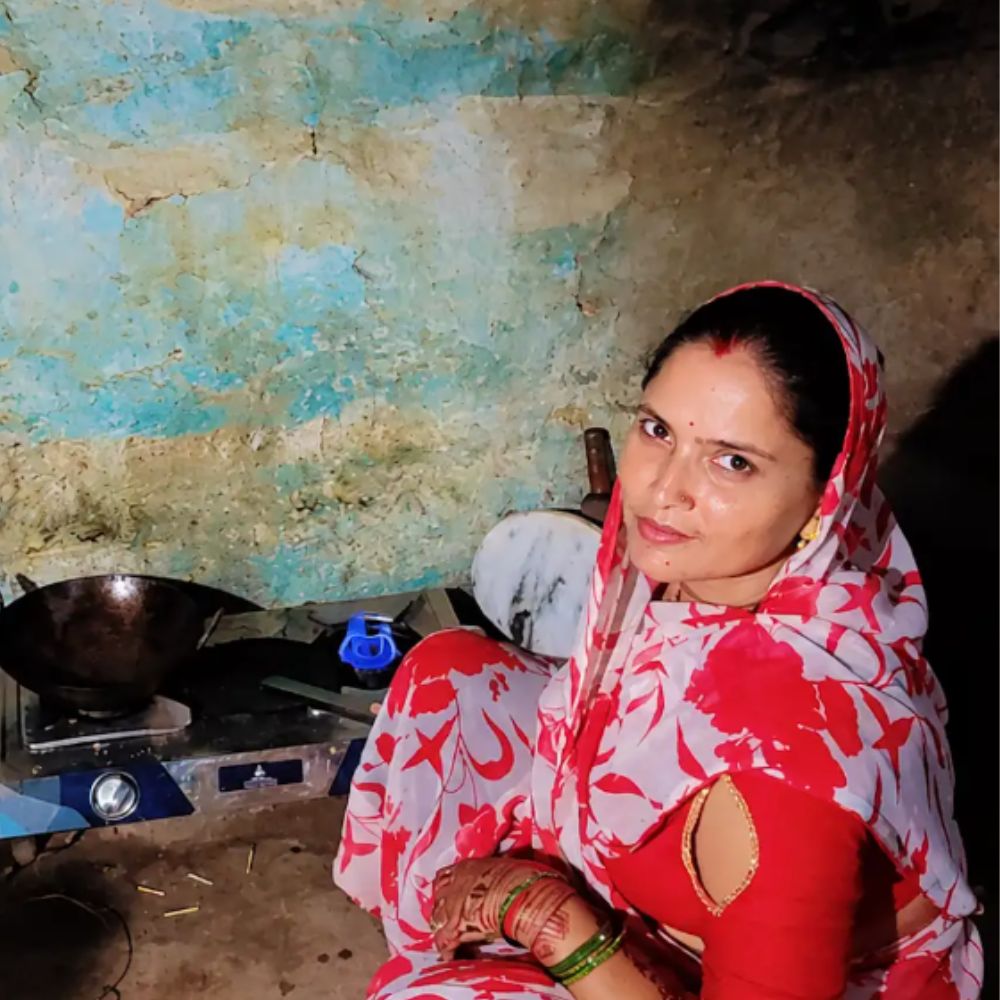
For Pratija Singh, 28, cooking was once a daily struggle. She lives with her family of six in Bijeta village in Muskura Block of Uttar Pradesh’s Hamirpur District. The family cooked on LPG, with each cylinder costing about ₹950, and spent around ₹11,400 a year on gas. Whenever large numbers of guests arrived, they turned to firewood, and that brought its own problems. The smoke filled the kitchen, the utensils turned black and wet wood was almost impossible to light.
“Bartan kale ho jate the,” she recalls. (The utensils would turn black.) “Khana banane mein dikkat hoti thi aur khansi aati thi.” (Cooking was difficult and I would start coughing.)
Yet the answer was already in her yard. The family owns five animals, and their dung had to be kept in a designated space, a daily chore that produced nothing of value.
Turning dung into fuel
That changed when Pratija’s household received a biogas unit under the Engendering Food Supply Chain programme (Phase II), implemented by Transform Rural India (TRI) as part of its Women-led Farmer Producer Organisation (WFPO) work and supported by the Walmart Foundation. The programme aims to reduce household costs, improve access to clean energy and create more sustainable livelihoods for farmers. The unit cost ₹38,000, with a 70% subsidy, and Pratija contributed ₹12,000 as the farmer’s share.
The unit works like a small factory in the backyard. Dung goes in, and two products come out: gas for the stove and slurry for the soil. Each day, the family feeds the dung from its animals straight into the unit.
“Gobar rakhne ki samasya bhi kam ho gayi. Ab jo bhi gobar nikalta hai, usko hum seedha biogas unit mein daal dete hain,” Pratija says. (The problem of storing cow dung has also eased. Whatever dung we get now, we put straight into the biogas unit.)
Today the family’s daily cooking runs on biogas. They no longer need LPG cylinders for routine cooking or firewood at all, and the smoke and blackened pots have gone with them.
“Dhue se mukti mili,” she says. (I am free of the smoke.)
From the kitchen to the garden
The benefits do not end at the stove. The slurry left behind is a nutrient-rich organic manure, and Pratija uses it in a shade net provided through the TRI programme with a 50% subsidy. Last season she grew cucumber, coriander and mint for the family, with no additional input cost and no chemical fertilizer.
What has emerged is a complete household cycle. Animal dung becomes cooking fuel, the slurry becomes manure, the manure grows vegetables and the vegetables feed the family. Waste that once took up space now powers the kitchen and nourishes the garden.
An investment that pays for itself
According to Pratija, her ₹12,000 contribution has already been recovered through the combined savings on fuel and fertilizer. The family’s annual spending on these, estimated at about ₹12,900, has effectively fallen to zero.
The savings will keep adding up. Over its estimated 25-year lifecycle, the plant is expected to generate around ₹3.22 lakh in cumulative household savings, mainly by cutting what the family spends on cooking fuel and fertilizer.
Demand is growing
Pratija’s household is one of nine where TRI has set up biogas plants under the programme, across three blocks: Muskura, Naraini and Tappal. Each family is experiencing the benefits in its own way, and word is spreading. In the Tappal area alone, the programme has seen demand for an additional 100 units.
The initiative aims to do far more than provide a clean stove. It sets out to cut farmers’ input costs, improve household food security, put livestock waste to productive use and make farming households more resilient. Pratija’s backyard shows that a single, well-designed unit can do all of this at once.
For Pratija, though, the biggest change cannot be measured in rupees.
“Zindagi aasan ho gayi hai,” (Life has become easier,) she says.