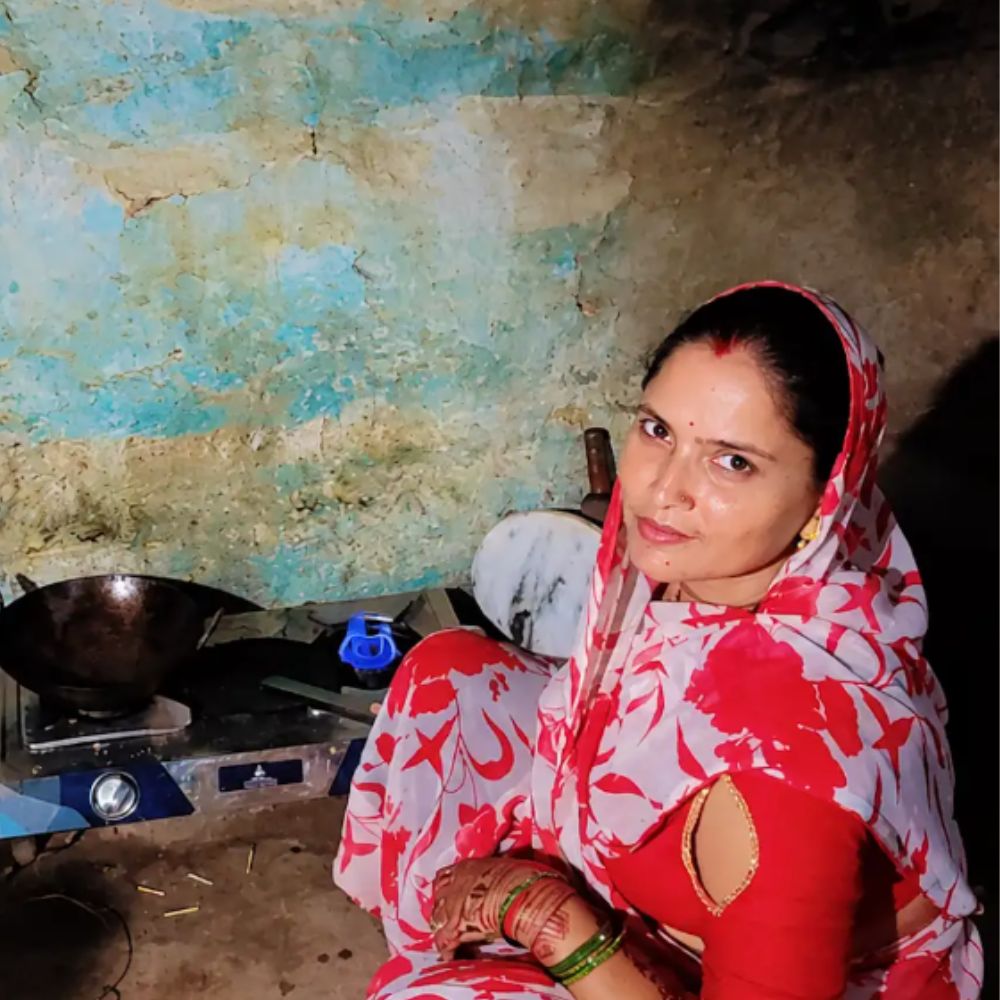
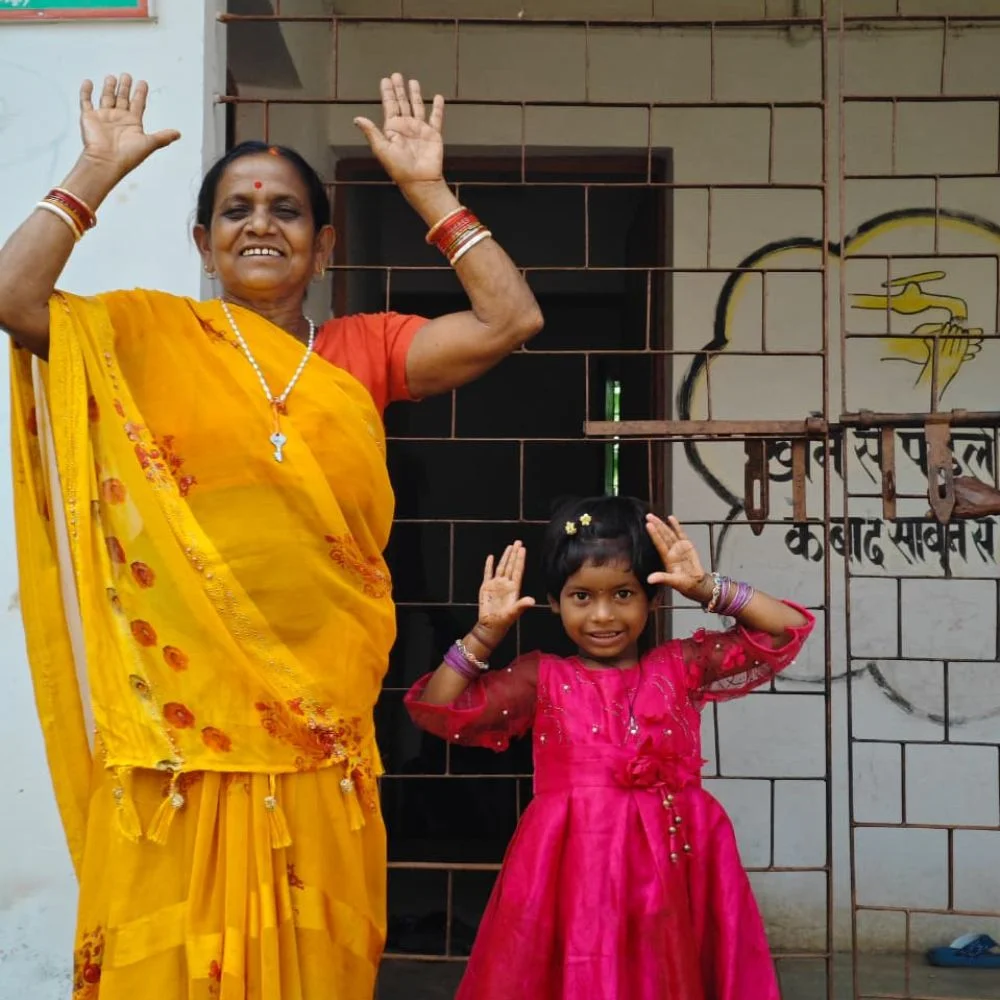
For years, Phoolmati Didi’s harvest depended on a machine she could not control. She grows paddy and wheat on one acre in Ghoomnabharu, a village in Mihinpurwa Block of Uttar Pradesh’s Bahraich District, and every irrigation meant renting a diesel pump. The pump was not always available when her crops needed water. The men of her household worked in the city, and the machine was too heavy for her to carry to the field and run alone. Irrigation was often delayed and her crops suffered. She spent around ₹5,000 on fuel, irrigation and labour, and the cost and uncertainty ate into what her small farm could earn.
Her neighbours faced the same problem. Irrigating one acre took nine to ten hours of pump operation at about ₹200 an hour. When diesel became costlier or ran short, as it did during the global war, farmers cut their Rabi irrigation from four cycles to two. For women without men at home, even two cycles were hard to manage.
Any real solution had to do more than replace diesel. It had to put water in women’s hands, and it could not take away land they could not afford to lose.
One field, two uses
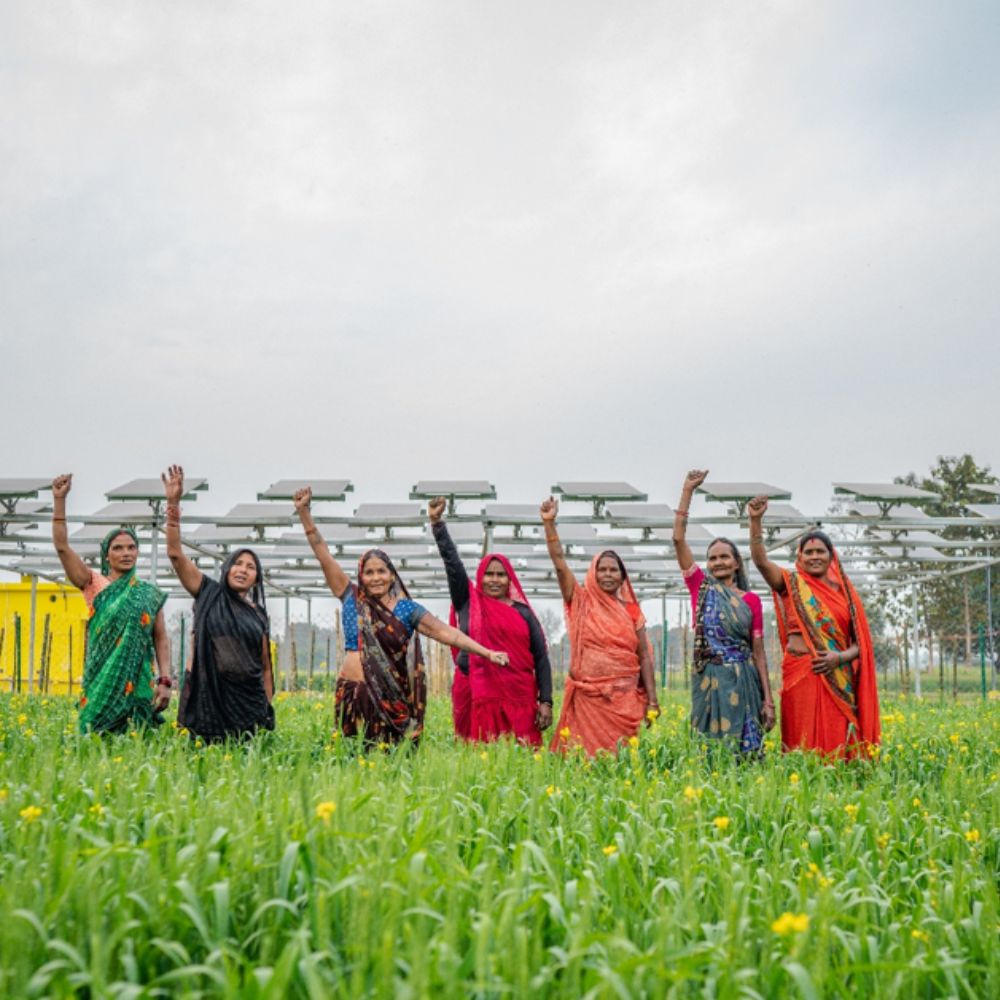
That solution is agrivoltaics, or Agri-PV, a model Transform Rural India (TRI) is implementing across several regions. For small farmers, solar energy has usually come with a trade-off: panels laid flat across a field leave no room to grow anything. Agrivoltaics removes that trade-off. The panels are mounted on raised structures high enough for farming to continue underneath, so the same field produces both food and energy. The panels power pumps that irrigate the land at one third the cost, while shade-tolerant crops grow or livestock graze beneath them. The land loses nothing and gains a second source of value.
Built by the community
TRI identified the problem in Ghoomnabharu and designed the response from the ground up, under the Engendering Food Supply Chain programme (Phase II), funded by the Walmart Foundation. TRI brought farmers together into Water User Groups, set up the technical system and trained the women to run it. Each group nominates members, many of them women, to a Village Energy Committee, a registered body that TRI’s development designers trained to manage everything from the pump to the members. Subscribers pay a minimal membership fee and an hourly rate they agree on together, and water reaches everyone who signs up.
Ambedkar Urja Samiti, a collective of 10 women farmers, is one of the water user groups that run the unit. In place of heavy machinery, the unit feeds a decentralised pipeline across 100 acres, with outlets spread over a 300-metre radius. The pipes are small enough for women to move and position themselves, so they can irrigate whenever their crops need it.
Phoolmati’s turn
For Phoolmati, that changed everything. She now irrigates her own field three to four times a season, and her crops show better growth, larger grain and higher quality. Her yield has risen by about one quintal per acre, to a total of 13 quintals. That is an additional output value of around ₹29,250 per acre at ₹2,250 per quintal.
The gains gave her the confidence to lease another 1.5 acres and grow more. They also changed her place at home. As her contribution to household income has grown, the men in her family now take her views and decisions into account on important household and livelihood matters.
A village transformed
Phoolmati’s experience is shared across the village. Here, 90% of farmers have moved from two irrigation cycles to three or four. The unit now irrigates 100 acres for 100 women farmers. Last Rabi season, productivity rose by 10 metric tonnes, adding ₹2.25 lakh in marketable value from a single crop. Women without men at home no longer have to wait for anyone before irrigating their fields.
Taking the model further
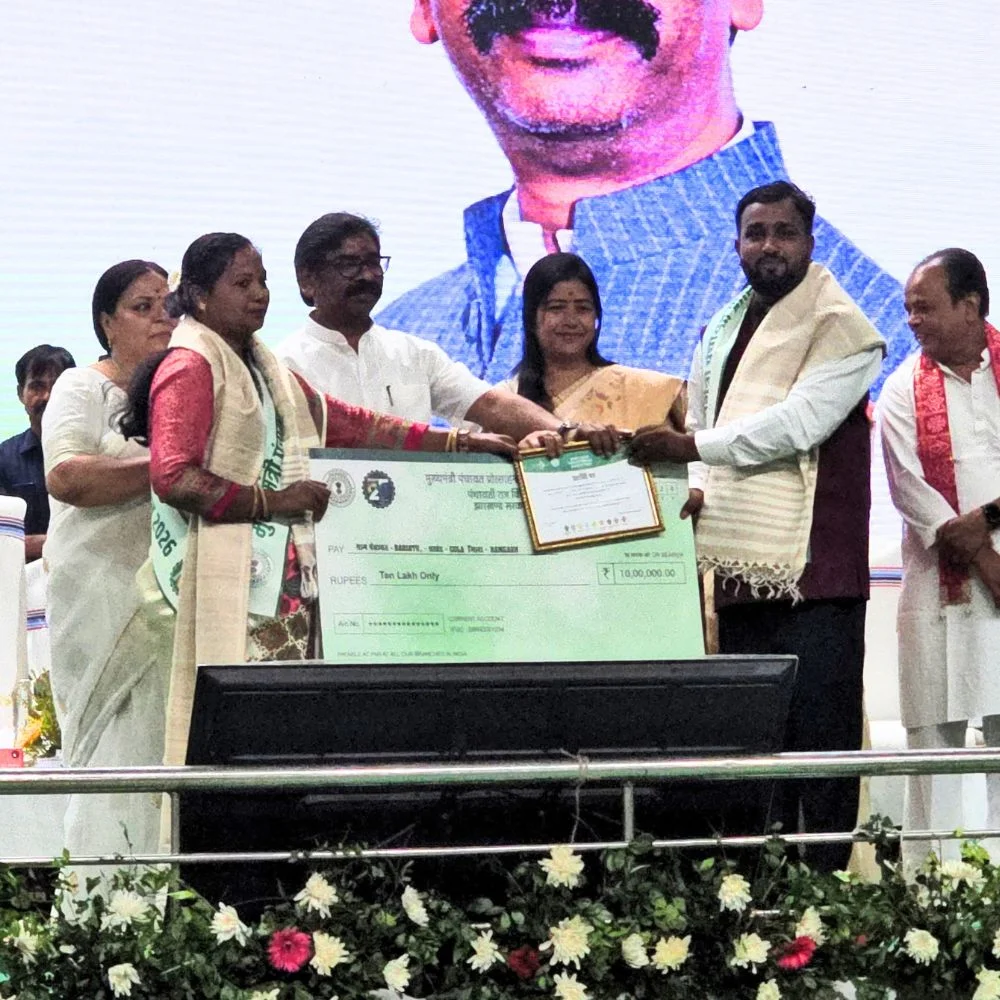
The same model is already changing lives beyond Bahraich. In Rengarbahar in Jharkhand, nearly 100 families are using agrivoltaics to power their homes for the first time. TRI’s next step is to take the model to more villages, building on what Ghoomnabharu has shown. Because each unit is run by a trained, registered committee, it can be handed over to communities that own it and keep it running.
Agrivoltaics does not ask farmers to choose between food and energy. In Ghoomnabharu, women like Phoolmati are proving they can have both.