I began my career wanting to build structures. As a civil engineer, I imagined myself designing physical infrastructure and solving tangible engineering challenges. But over time, I realised that some of the most complex systems to build are not physical at all. They are the systems that shape people’s access to opportunity, livelihoods, and dignity.
That realization took root during my Master’s in Technology and Development at the Centre for Technology Alternatives for Rural Areas (CTARA), Indian Institute of Technology Bombay. For the first time, I was exposed to the realities of rural India and to a different kind of problem-solving, one that required technical expertise, systems thinking, and a deep understanding of how institutions and communities interact.
2026 marks a decade of my journey in the development sector, a journey that has taken me across research institutions, government systems and field implementation roles. I began as a Research Associate at IIT Bombay, working on monitoring and evaluation of government schemes for the Directorate of Economics and Statistics, Government of Maharashtra. That experience gave me an early understanding of how public systems function and where implementation challenges often emerge.
Over the years, I worked across health, nutrition, education, governance and rural development. Each role expanded my understanding of development, but also reinforced one reality: sustainable change requires more than good policy design. It requires strong local institutions, convergence across departments and solutions rooted in the lived realities of communities.
It was in 2023 that I first became aware of Transform Rural India (TRI). What drew me to TRI was its approach, one that does not treat development challenges in isolation, but works at the intersection of communities, institutions and systems to create change that can sustain and scale.
I have now been with TRI for over two and a half years, working in the Climate Action vertical. My work focuses on climate resilience, landscape restoration, natural resource management and strengthening evidence-based planning with government partners. One of the most exciting aspects of this role is the opportunity to think beyond programme delivery and engage with the larger systems that shape development outcomes.
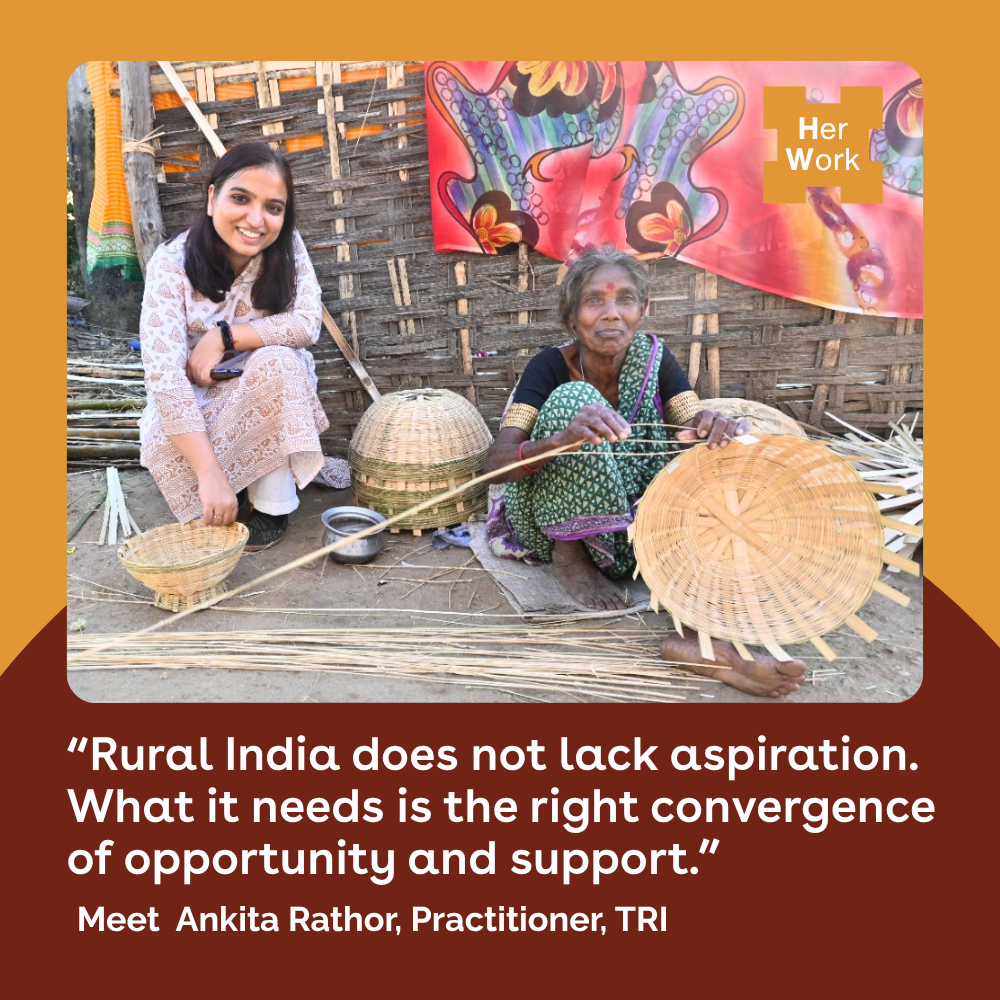
A significant part of my work has involved landscape restoration and bamboo value chain development in Maharashtra. What makes this work meaningful is that it brings together ecological restoration and livelihood generation. It is not only about plantation or natural resource management, but about building forward linkages, strengthening market ecosystems and creating sustainable livelihood opportunities for rural communities. For me, this reflects what effective rural development should look like: integrated, community-centred and designed for long-term impact.
One of the most meaningful transformations I have witnessed has been in Wasala Makta, a Community Forest Rights (CFR) village in Chandrapur district. I first visited the village in 2022, when the community was still navigating challenges around securing and operationalising its CFR claims. During that time, I had the opportunity to support efforts to raise the issue with district leadership.
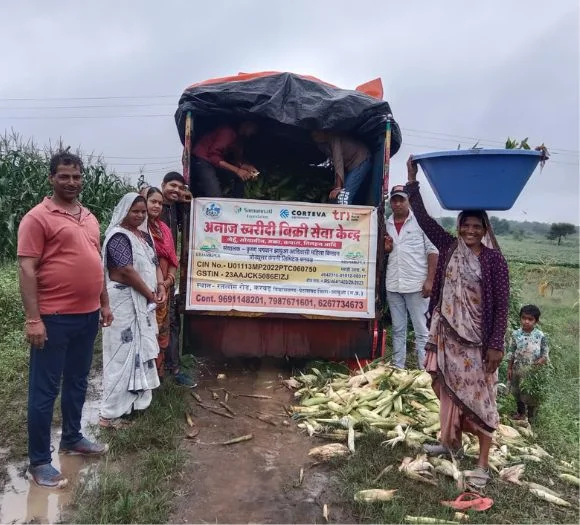
Later, after joining TRI, I found myself reconnecting with the same geography through our engagement with the Chandrapur administration. TRI’s work helped accelerate administrative approvals for MGNREGA-linked works in the village. Over time, the village undertook nearly 20 works, generating substantial local employment and creating income opportunities that significantly reduced migration.
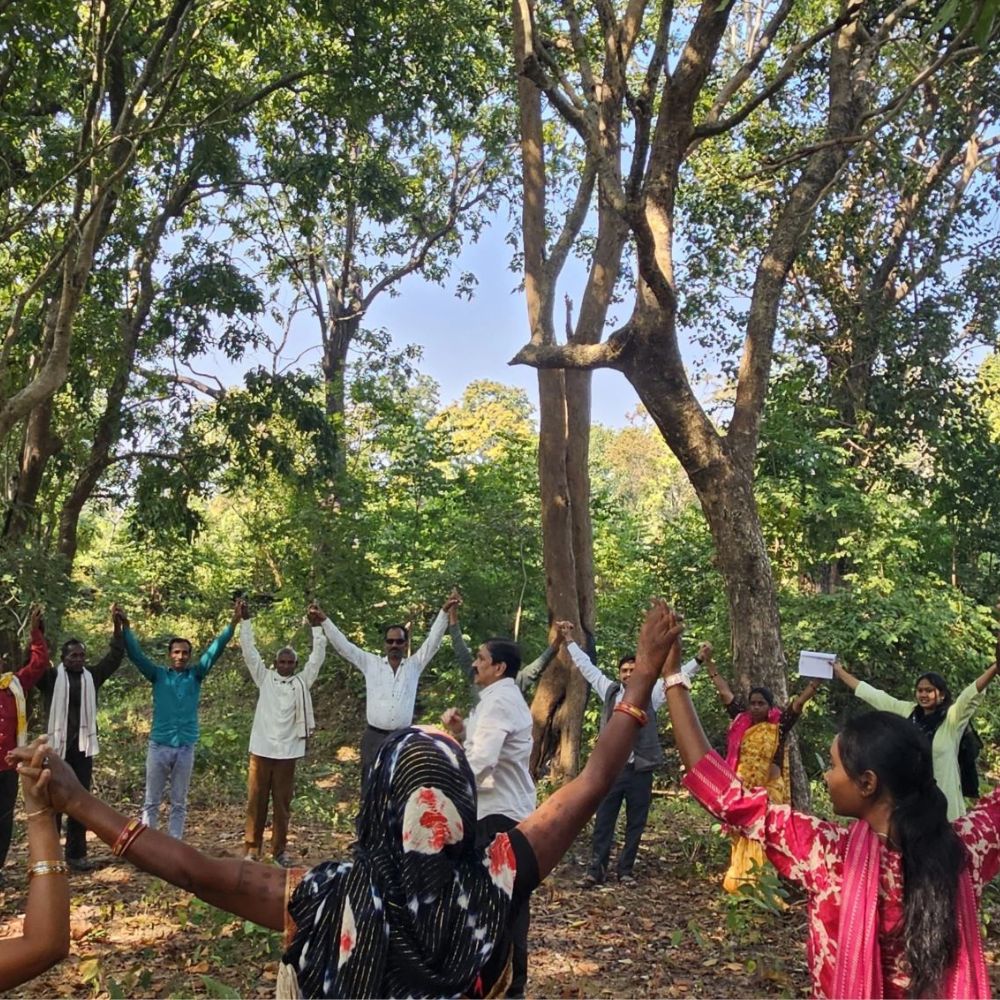
But the real transformation went far beyond the numbers. When I revisited the village in 2025, I saw something far more powerful: a community that had moved from uncertainty to ownership. People were confidently discussing planning processes, implementation decisions and future investments for village infrastructure. The shift was not simply economic. It was institutional and psychological.
One moment, in particular, stayed with me. During a visit to nearby CFR villages, I unexpectedly met Rambhau Raut, a community leader I had interacted with earlier in this journey. He was standing beside a bus carrying Gram Sabha representatives from Telangana who had come to learn from Wasala Makta’s experience. Seeing a village that had once struggled for recognition become a learning site for others was a deeply affirming moment. It reinforced my belief that when communities are empowered with institutional support and ownership, transformation becomes self-sustaining.
What continues to motivate me in this work is the possibility of creating change that lasts beyond individual interventions. Rural communities consistently demonstrate resilience, innovation and leadership, often in contexts of limited resources. Our role, I believe, is not to deliver solutions from the outside, but to strengthen the systems, institutions and partnerships that enable communities to shape their own development journeys.
This work has also changed me personally. It has made me more patient, more grounded and far more conscious of the importance of listening. Working across administration and communities has taught me that there are rarely linear solutions to complex development challenges. Context matters. Timing matters. Trust matters.
If there is one thing I have learned over the years, it is that rural India does not lack aspiration or capability. What is often needed is the right convergence of resources, institutions and opportunity.
My hope is to see rural communities become more climate-resilient, self-reliant and confident in shaping their futures, especially women and young people whose leadership can redefine what inclusive development looks like. I hope to see communities move beyond securing livelihoods alone and aspire equally towards better health, nutrition, education and quality of life. If our work can help create systems where migration becomes a choice rather than a compulsion, and where communities become models that inspire others, that would be deeply meaningful.