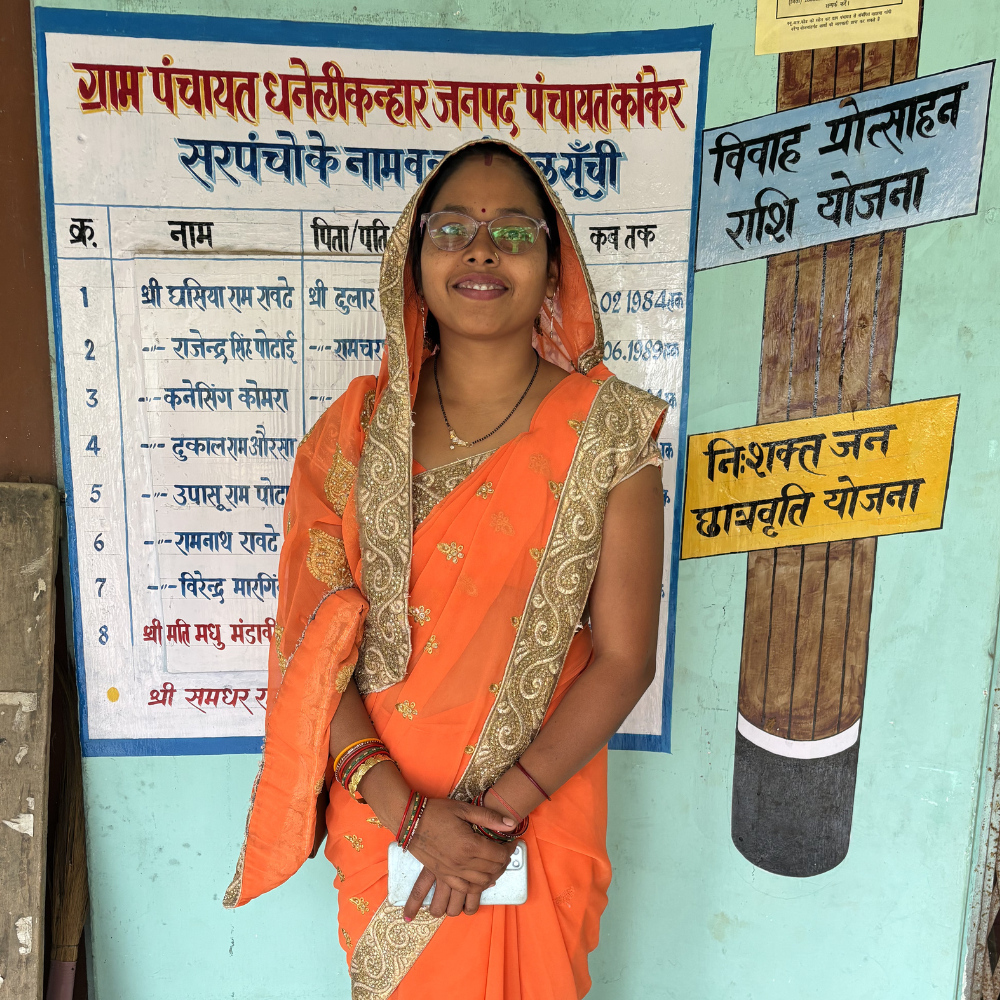
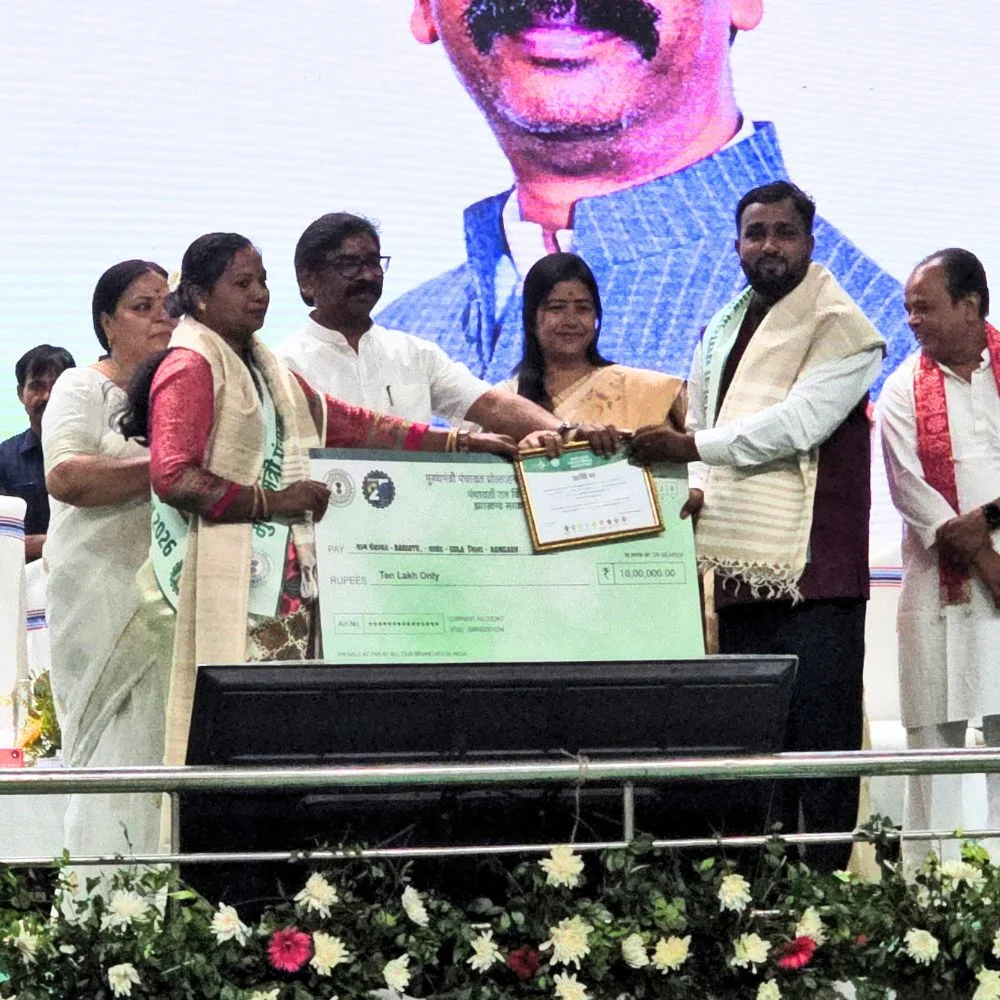
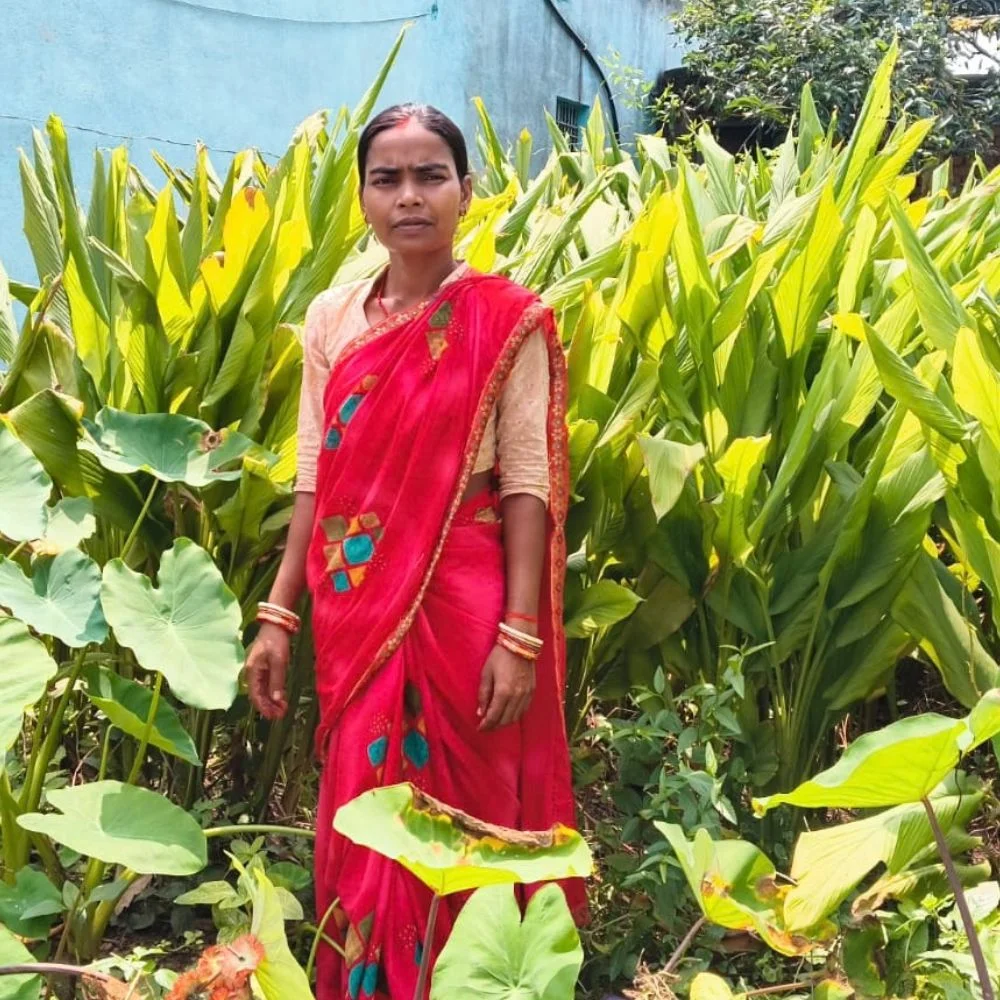
Madhu Mandavi is the first woman to hold the position of Sarpanch in Danehlikanhar Gram Panchayat in Chhattisgarh since the introduction of the three-tier Panchayati Raj system. That is a milestone worth pausing on, not because it happened suddenly, but because it was built steadily over years of participation, learning, and leadership within her village.
Madhu came to Danehlikanhar after her marriage to Vijay Mandavi. Like many women who move into rural joint households after marriage, her early years were shaped by domestic responsibilities and the rhythms of family life. But even then, she remained deeply observant of the challenges around her and carried a quiet determination to contribute to improving her village.
Her journey into public leadership began in 2017, when she joined the Saraswati Self-Help Group (SHG). For the first time, she found a regular space where women gathered not just to save and borrow collectively, but to speak, listen, and think together about their lives and communities. These meetings gradually strengthened her confidence. As she became more involved, she began participating in Village Organisation (VO) meetings, which exposed her to a wider network of women, local issues, and collective problem-solving.
With support from the SHG, Madhu took a loan and started a small computer shop near her home, creating an independent and stable source of income. Alongside this, she also engaged in vegetable cultivation and agricultural work, contributing to her household’s livelihood. Over time, her consistency, clarity, and willingness to take responsibility did not go unnoticed. The women in her SHG had seen her commitment firsthand, and when the panchayat elections approached, they encouraged her to contest.
Madhu was initially unsure. Contesting an election felt like a significant leap. But with the encouragement of her family and the unwavering support of the SHG women who had stood beside her over the years, she decided to step forward. She contested and won by a significant margin.
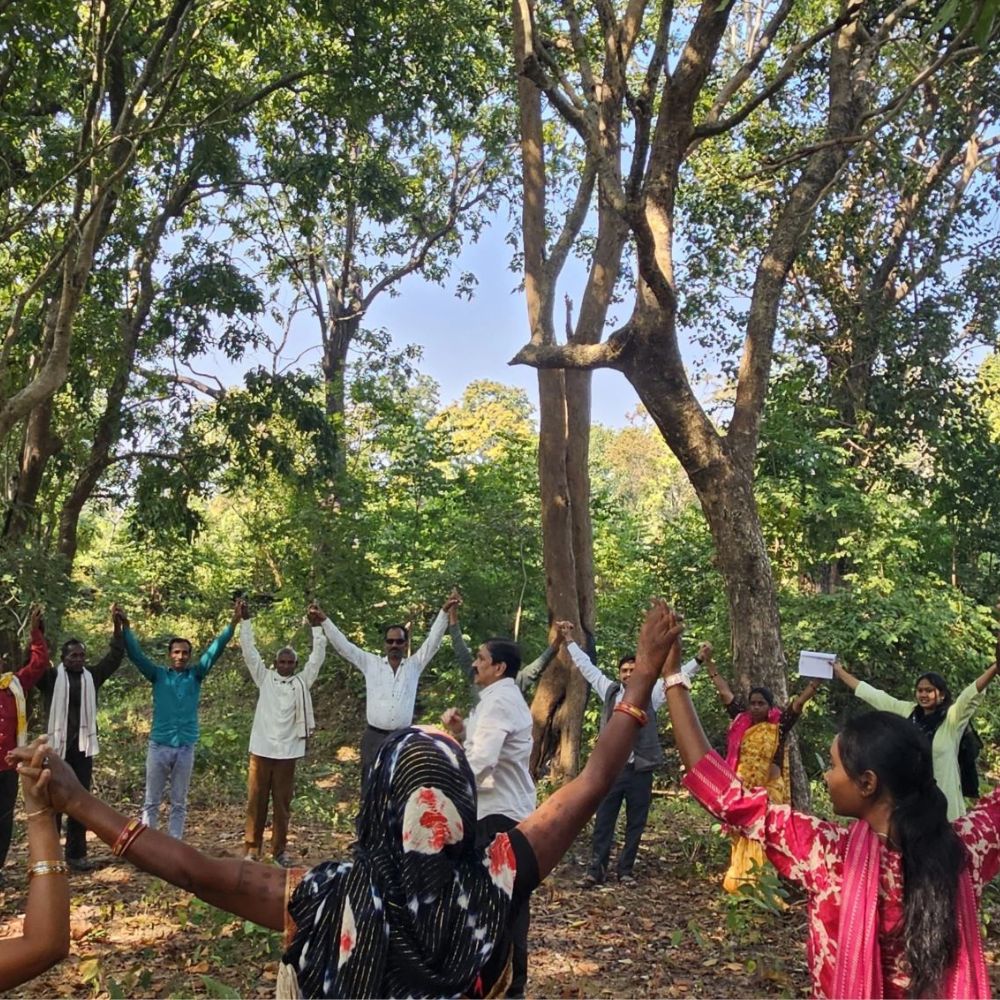
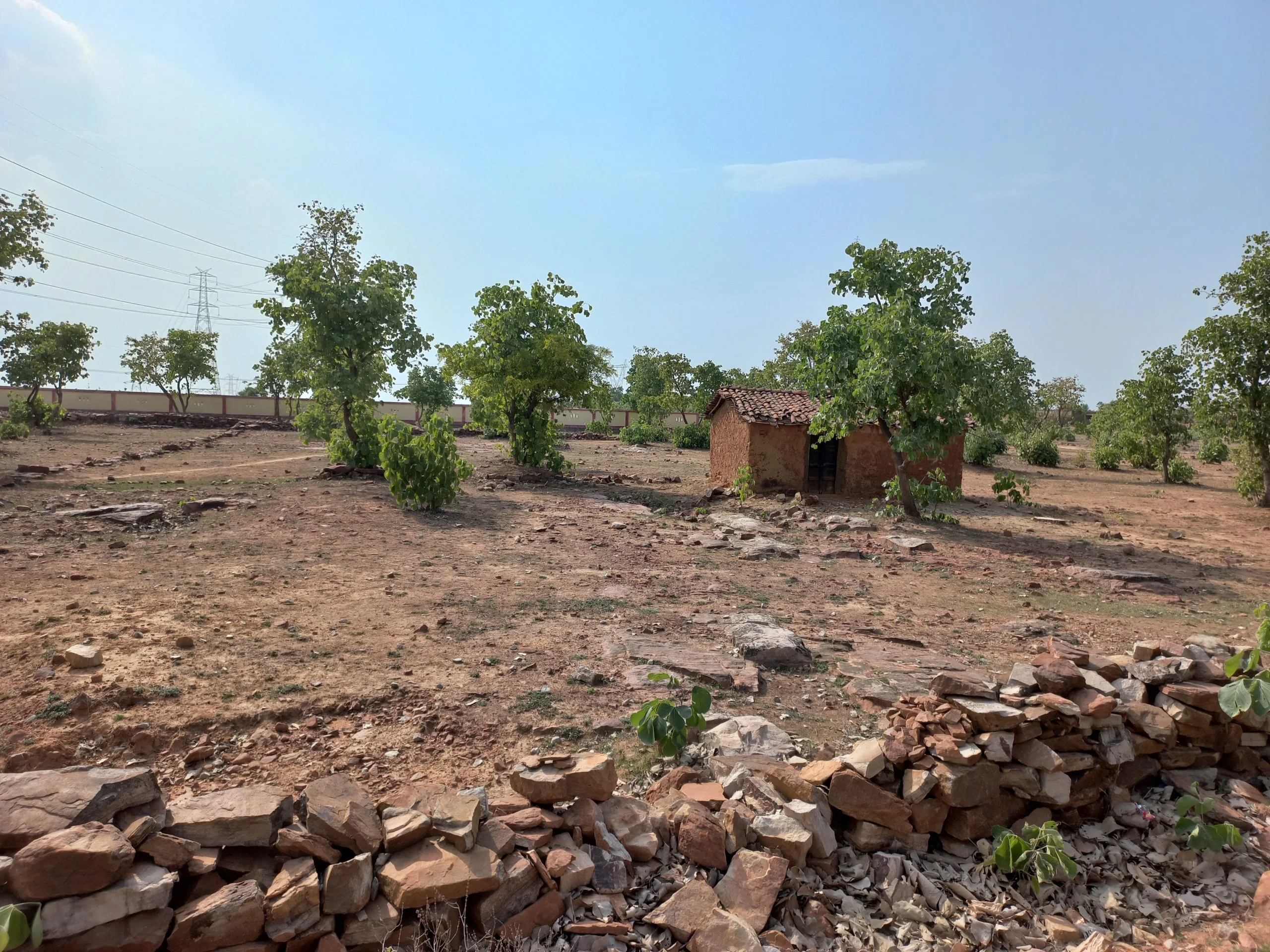
In 2025, Madhu assumed office as Sarpanch and quickly began translating leadership into action. One of her first priorities was water conservation and natural resource management. With technical facilitation and planning support from Transform Rural India (TRI), she led the preparation of Integrated Natural Resource Management (INRM) plans for her Gram Panchayat. This was not a desk exercise. Madhu personally walked across the village landscape, helping identify water flow patterns, degraded areas, and opportunities for conservation. The planning followed the ridge-to-valley approach, treating the watershed as an interconnected ecological system rather than addressing isolated issues.
Of the 77 plans prepared, 29 have received sanction so far. Through these efforts, nearly ₹56 lakh has been mobilised under the Mahatma Gandhi National Rural Employment Guarantee Act (MGNREGA), now being implemented through the Village-Based Gram Panchayat Resource Augmentation Model (VBG-RAM-G) framework. The interventions include Soil Conservation Trenches, Continuous Contour Trenches, Water Absorption Trenches, farm ponds, community ponds, land levelling, and plantation work, all designed to improve groundwater recharge, strengthen ecological resilience, and support long-term livelihoods. Importantly, the employment generated through this work has remained within the village, with wages reaching local households through their own job cards.
Madhu’s leadership has extended beyond infrastructure. She has worked to ensure that women participate meaningfully in the Gram Sabha, not merely as attendees, but as active contributors to local decision-making. Under her leadership, the Gram Panchayat Development Plan (GPDP) has been completed with due process, and she regularly engages with line departments to track the implementation of government schemes, following up persistently until commitments translate into outcomes.
As a result, families in Danehlikanhar are accessing benefits under schemes such as MGNREGA and Pradhan Mantri Awas Yojana (PMAY) with greater consistency. Support that once moved slowly, or not at all, is now reaching people more effectively. The gap between entitlement and access has narrowed because there is now a Sarpanch who follows through.
The women who once sat with Madhu in SHG meetings, encouraging her to take that first step into leadership, continue to be part of her journey. Their faith in her was well placed.